
Silence of the Lambs, The (4K UHD Review)
Director
Jonathan DemmeRelease Date(s)
1991 (October 20, 2026)Studio(s)
Orion Pictures (The Criterion Collection – Spine #13)- Film/Program Grade: A+
- Video Grade: A+
- Audio Grade: A
- Extras Grade: A-

Review
Few things can be said about The Silence of the Lambs that haven’t already been expressed elsewhere ad infinitum. It’s everything that all of the critical praise laid upon it says it is, perhaps even more so. A tight and engaging thriller bordering on the verge of horror, it’s one of the finest films of its kind. While it’s often overshadowed by the impact that it had on popular culture for many years after (and continues to do so), it’s easy to take for granted the quality of the film itself. Debates have raged for decades over the varying degrees of quality of and preference points for the other Thomas Harris-penned adaptations: Manhunter, Hannibal, Red Dragon, Hannibal Rising, and both the Hannibal and Clarice TV series. However, none of those projects won as many awards or exerted as much long-lasting influence as The Silence of the Lambs since it hit theaters in February of 1991, or when it came to home video later that same year.
Revisiting The Silence of the Lambs today, which is a frequent re-occurrence for me, there are often small details in its design and execution that come more to the forefront as the film ages. Overlooked items of interest in the background of a scene, whether it be a performance or an object, help renew the film’s shelf-life and further cement its verisimilitude. It’s also amazing that a film perceived by many as a straight horror film about a sexually complex serial killer who slays and skins his female victims in order to construct a woman’s suit, is also a feministic war cry, reinforced at every possible opportunity by both Jodie Foster’s performance and Jonathan Demme’s framing and design.
As the film progresses, this theme slowly builds as Clarice Starling begins to take control in her world and conquer the obstacles and monsters within it. She becomes both a survivor and a hero in a typically male-driven profession. Her relationship with Anthony Hopkins’ Hannibal Lecter is also one of cinema’s great verbal dances between two characters. Lecter is obviously the intellectual superior but, despite his constant needling of Starling, he does respect her. Starling, conversely, is both driven and curious, making Lecter somewhat alluring to her, whether she’ll admit it out loud or not.
On the less academic side of things, The Silence of the Lambs is simply an intriguing tale, well-shot by Tak Fujimoto and thoroughly-well directed by the late, great Jonathan Demme. The performances are memorable and effective across the board. Hopkins and Foster are the obvious standouts and continue to be lauded, but the supporting players also offer strong backing for their stars, including Ted Levine and Scott Glenn, among many others. The film also lacks any strong negative criticism, other than the homophobic and transphobic accusations made against it, which in this reviewer’s personal opinion, was more of a larger problem than a single film’s problem. All of that aside, The Silence of the Lambs leaves little to no wiggle room for complaint as a piece of entertainment and continues to be a potent film 35 years on.
The Silence of the Lambs was shot by cinematographer Tak Fujimoto on 35mm film using Panavision Panaflex cameras and Panavision spherical lenses, finished photochemically, and presented in the aspect ratio of 1.85:1. The Criterion Collection debuts the third Ultra HD outing of the film utilizing the same 4K scan of the original camera negative performed by MGM that was included on the Kino Lorber Studio Classics UHD release in 2021 and the Arrow Video UHD release in 2024. For the Arrow release, Tak Fujimoto approved High Dynamic Range color grades in HDR10 and Dolby Vision while David MacKenzie from Fidelity in Motion performed the encode. Criterion’s release features what is essentially Tak Fujimoto’s approved grading, but with slightly additional correction by Kevin O’Connor from EFILM (more on that later), as well as a new encode by NexSpec to a triple-layered BD-100 disc.
Being that this is the third major release of The Silence of the Lambs on 4K Ultra HD and that Arrow Video’s previous release was so definitive, it’s easy to rush into Criterion’s release and declare it to be inferior without having even looked at it. However, that’s not the case, at least visually. NexSpec gives FiM a run for its money with a very similar encode that without extreme scrutiny, meaning looking at high quality screencaps, it appears nearly identical. In fact, the whole of the presentation seems that way at a glance. This is a completely new restoration from the exact same 4K master, but they look so close to each other that you’d be hard-pressed to tell the difference. Bitrates are slightly higher, mostly sitting in the 80 to 100Mbps range, but quite often reaching into the 90 to 110Mbps range. Looking at them closely, you can see that detail and grain is ever so slightly tighter on the Arrow release, but it’s so negligible to the naked eye that it hardly matters. The HDR grades still offer a rich and textured presentation with the proper amount of saturation, though a slight pass has been performed that takes some of the bleed away from the white levels. Again, this is something that’s so minor that most viewers won’t notice or care. The HDR10 grade boosts things dutifully, but the Dolby Vision pass is even better in terms of blacks and consistency in the contrast. The only visual flaws are those built in organically, which boil down to optical title overlays. However, these shots don’t appear as intrusive as many other films. Everything appears sharp and well-delineated, with even minor flaws such as the string attached to one of the death’s head hawkmoths being more clearly visible. I still consider the Arrow Video release to be the apex for this film visually on home video, but this is a mighty fine second option to have. Without doing a frame-by-frame analysis (let’s face it, who’s going to do that?), this a gorgeous alternative, and a marked improvement on Criterion’s Blu-ray release of the film.
Audio is included in English 2.0 DTS-HD Master Audio, with a 5.1 alternative, and optional subtitles in English SDH. Released theatrically in Dolby SR, the original theatrical soundtrack has come and gone between various releases over the years. The Criterion Blu-ray did carry it while the Kino UHD did not, instead featuring a 2.0 fold-down of the 5.1 track. Arrow’s UHD sourced and restored the proper original matrixed stereo soundtrack for the film. Criterion’s Blu-ray was more compressed and bass-heavy, which is similar to their LaserDisc release, whereas Arrow’s audio was a more balanced experience. Flipping back and forth between releases (once again), it appears that Criterion has included an uncompressed theatrical audio option that does have more bass to it, as well as volume. The low rumblings, various beeps and clanks, and echo-ish qualities of the Baltimore State Hospital for the Criminally Insane are much more pronounced. Whether this is the truly unfiltered original theatrical audio is unclear since there are too many options to compare to, though I tend to prefer the more balanced experience that the Arrow disc offers. However, some may find the extra bass on Criterion’s release more ideal. Moments have more obvious aural impact, such as Clarice and Lecter slamming the passing tray between each other in Lecter’s cell, or when the garage door closes while Clarice is inspecting the Your Self-Storage facility. On the Arrow track, those scenes do have less overall impact in the lower registers, but they also feel more organic than bombastic, which seems appropriate for a film that’s more about texture than cacophony. Either way, the stereo fold-out is gorgeous, with various wisps of sound effects happening all around, sometimes in the farthest left and right registers, while dialogue is clear and not fully anchored to the front or center. One’s mileage may vary on this depending upon their familiarity with the film (I’ve personally seen it countless times on a number of different formats), but be rest assured that nothing is amiss technically. It all comes down to preference in the end. And if you so prefer, there’s the 5.1 alternative.
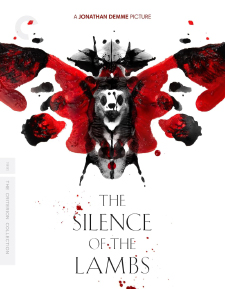
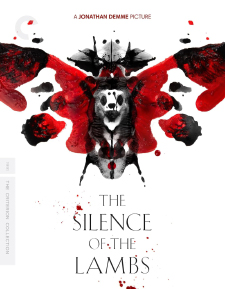
The Criterion Collection 3-Disc 4K Ultra HD release of The Silence of the Lambs sits in Digipak packaging with a slipcase containing artwork by Sean Freeman and Eve Steven of There Is Studio. Also included are two 1080p Blu-rays, both containing the same content as Criterion’s 2018 Blu-ray release, as well as a 66-page booklet containing cast and crew information, an introduction by Jodie Foster, the essays A Hero of Our Time by Amy Taubin and Reckoning with Jame Gumb by Caden Mark Gardner and Willow Catelyn Maclay, Meeting Hannibal Lecter by Thomas Harris, Identity Check: An Interview with Jonathan Demme by Gavin Smith, master information, special thanks, acknowledgments, and production credits. The following extras are included on each disc:
DISC ONE (UHD – FILM)
- Audio Commentary with Jonathan Demme, Jodie Foster, Anthony Hopkins, Ted Tally, and John Douglas
DISC TWO (BD – FILM)
- Audio Commentary with Jonathan Demme, Jodie Foster, Anthony Hopkins, Ted Tally, and John Douglas
- Deleted Scenes (SD – 24 in all – 37:58)
- Maitland McDonagh (HD – 17:58)
- Trailer (HD – 1:49)
DISC THREE (BD – SUPPLEMENTS)
- Jonathan Demme & Jodie Foster (SD – 52:30)
- The Making of The Silence of the Lambs: Inside the Labyrinth (SD – 66:25)
- Page to Screen (SD – 41:07)
- Scoring The Silence (SD – 16:00)
- Understanding the Madness (HD – 19:33)
- Behind-the-Scenes Featurette (SD – 8:07)
- Storyboards (HD – 4:11)
The audio commentary, recorded in 1994 for Criterion’s LaserDisc release, features director Jonathan Demme, actors Jodie Foster and Anthony Hopkins, screenwriter Ted Tally, and former FBI agent John Douglas. An index is provided to jump to specific subjects since it drops out here and there as each contributor provides their own viewpoint on the film. Next is what appears to be a complete archive of all of the film’s Deleted Scenes, as well as a set of outtakes, and a humorous answering machine message from Hannibal Lecter. Most of the excised material is connective tissue and extensions of scenes already present, but there are few genuine deleted bits to be had. Critic and writer Maitland McDonagh then discusses in a 2017 interview the public’s fascination with serial killers in film. Also included is the trailer.
Jonathan Demme & Jodie Foster is a 3-part documentary by Laurent Bouzereau, which features the titular director and actor talking about their collaboration together, albeit separately. Inside the Labyrinth is a 2001 documentary by Jeffrey Schwarz that was produced for MGM’s Special Edition DVD release during the making of Hannibal and features interviews with nearly all of the main cast and crew about the creation, release, and impact of the film. Page to Screen features the 2002 Bravo TV series in two parts, The Silence of the Lambs: A Wealth of Talent and The Silence of the Lambs: Preparation & Authenticity, both hosted by Peter Gallagher and featuring interviews with the cast and crew. Scoring The Silence is a 2004 interview that speaks to composer Howard Shore about the film’s score. Understanding the Madness from 2008 discusses the profiling of serial killers with various retired FBI agents. Also included is the film’s promotional Behind-the-Scenes Featurette containing interviews with Jonathan Demme, Jodie Foster, Anthony Hopkins, Scott Glenn, and John Douglas. Last is a set of animated Storyboards for three scenes.
What can be frustrating for fans is that this is no way, no how a complete archive of all of the existing bonus materials included with every previous release of the film. Arrow Video’s UHD contains a number of materials that haven’t carried over, including an audio commentary with queer film historian and programmer Elizabeth Purchell and trans film critic and researcher Caden Mark Gardner; another with film critic and historian Tim Lucas (which was also included on the Kino Lorber Studio Classics UHD); Through Her Eyes, a visual essay by critic Justine Peres Smith about the Pygmalion myth and how it relates to Clarice as a character; Healing Humanity, featuring critic Willow Catelyn Maclay who explores how point of view and personalization play roles within the film’s characters; Breaking the Silence, an entire alternate version of the film containing picture-in-picture interviews and trivia, which was originally included on MGM’s 2009 Blu-ray release; the film’s teaser trailer; 11 TV spots; an Image Gallery containing 20 stills of behind-the-scenes photos and posters; and an insert booklet containing essays by Alexandra West, Sam Moore, Josh Nelson, and Alexandra Heller-Nicholas. The 2009 MGM Blu-ray also includes 8 photo galleries and a set of Hannibal Lecter recipe card inserts. Also missing from the Criterion LaserDisc and DVD releases are a set of production photos, a film-to-storyboard comparison, 7 separate storyboard sequences, and the text-based FBI Crime Classification Manual and Voices of Death quotes from real-life serial killers.
As evidenced by the extras, both accounted for and otherwise, The Silence of the Lambs has had its fair share of home video releases since 1991, as it’s surely a guaranteed seller for anyone who distributes it. Arrow Video’s UHD blew its predecessors away in terms of video and audio, even if the extras weren’t quite as complete as they could be. Criterion appears to be in the same boat, so the question remains if you already own the Arrow Video release, is it worth upgrading? If you want the additional bonus materials, of course. Picture and sound are terrific on both releases, but it’s difficult to fully commit to one or the other since they’re both so solid. I say own them both, but that’s me. And if you don’t already own The Silence of the Lambs on UHD, then by all means pick this release up as it comes highly recommended, like its predecessor.
- Tim Salmons
(You can follow Tim on social media at these links: Twitter, Facebook, and Letterboxd. And be sure to subscribe to his YouTube channel here.)