
Complete Kubrick, The (4K UHD Review)
Director
Stanley KubrickRelease Date(s)
1951-1999 (October 20, 2026)Studio(s)
RKO Radio Pictures/United Artists/Universal International/Metro-Goldwyn-Mayer/Columbia Pictures/Warner Bros Pictures (The Criterion Collection)- Film/Program Grade: See Below
- Video Grade: See Below
- Audio Grade: See Below
- Extras Grade: N/A
- Overall Grade: N/A

Review
Stanley Kubrick was a filmmaker who provoked strong reactions all throughout his career, both positive and negative. For every fan who considers 2001: A Space Odyssey to be one of the greatest films ever made, there’s a detractor who thinks that it’s a cold and sterile exercise in technical proficiency. And so on, and so on. Still, if there’s one common thread that ties together Kubrick’s entire oeuvre, it’s that first impressions aren’t always the lasting ones. Even the films that drew mixed critical and popular reactions when they were first released have been reappraised over the years, generally gaining in stature with repeat viewings. As a result, his body of work has stood the test of time regardless of how any given film was initially received. Love Kubrick or hate him, there’s no denying his importance in the history of cinema and the profound influence that he’s had on other filmmakers.
That has also resulted in plenty of anthologies of his work on every possible physical media format, most of them with strengths and weaknesses of their own. Now, The Criterion Collection has attempted to create the one set to rule them all with The Complete Kubrick, a massive 30-disc box offering all of his films on both 4K Ultra HD and Blu-ray, along with an abundance of supplemental material. It also includes an eighty-page booklet featuring a lengthy essay by Nathaniel Rich, cast & credit listings, and technical information about the video masters that are included.
That’s actually the easy part. Where things get more into the “love it or hate it” category is with Criterion’s packaging, which is arguably a weakness here. The discs and the booklet are housed inside an oversized hard box with individual cardboard pages inside for the discs—yes, that means they’re packed tightly into glued-together cardboard sleeves rather than in paper sleeves or on plastic spindles, and they’re deuce difficult to pull out without scratching the discs. It’s a triumph of form over function: a beautiful looking set that’s impractical for anyone who loves and cares for their physical media. Unsurprisingly, this packaging has already provoked strong reactions on social media, so it’s oddly Kubrickian in its own way.

Setting the packaging aside, what are the strengths and weaknesses of the rest of the set as a whole? Well, we’re going to be here for a while, so find a comfortable chair, pour a refreshing beverage, and let us guide you through it one step at a time. As with any boxed set of this magnitude, we’re going to address each film in the set individually and keep updating this review until we’re through the whole thing. Are you sitting comfortably? Then let us begin. Below, you’ll find quick links that will jump to each individual film in the collection and the final summary at the end:
DISCS ONE & TWO: KILLER’S KISS
DISCS THREE & FOUR: THE KILLING
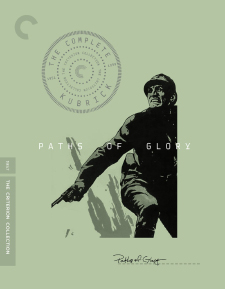
DISCS FIVE & SIX: PATHS OF GLORY
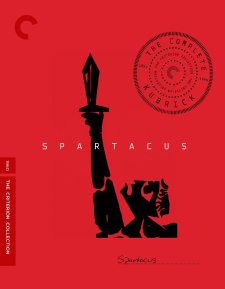
DISCS SEVEN & EIGHT: SPARTACUS
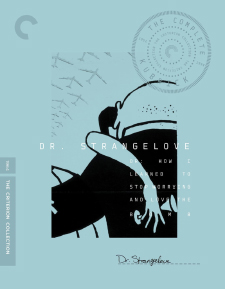
DISCS ELEVEN & TWELVE: DR. STRANGELOVE, OR: HOW I LEARNED TO STOP WORRYING AND LOVE THE BOMB
DISCS THIRTEEN, FOURTEEN, & FIFTEEN: 2001: A SPACE ODYSSEY
DISCS SIXTEEN & SEVENTEEN: A CLOCKWORK ORANGE
DISCS EIGHTEEN, NINETEEN, & TWENTY: BARRY LYNDON
DISCS TWENTY-ONE, TWENTY-TWO, TWENTY-THREE, & TWENTY-FOUR: THE SHINING
DISCS TWENTY-FIVE & TWENTY-SIX: FULL METAL JACKET
DISCS TWENTY-SEVEN, TWENTY-EIGHT, & TWENTY-NINE: EYES WIDE SHUT
DISC THIRTY: ADDITIONAL SUPPLEMENTS
SUMMARY
DISCS ONE & TWO: KILLER’S KISS
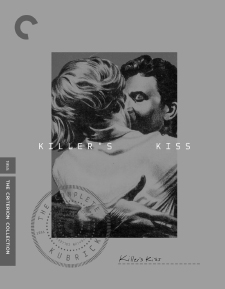
Stanley Kubrick’s sophomore feature Killer’s Kiss was a shoestring-budgeted film noir that he later dismissed as being amateurish (although at least he didn’t completely disown it like he would end up doing with his debut film Fear and Desire). Yet regardless of how he may have felt about it, Killer’s Kiss was still his first real step forward as a filmmaker, and it laid the foundation for his masterful follow-up The Killing. The story (from an uncredited Howard Sackler) is fairly standard issue noir fodder, with hapless New York City boxer Davey (Jamie Smith) becoming involved with his neighbor Gloria (Irene Kane), only to run afoul of her shady employer Vincent (Frank Silvera). While Gloria isn’t really a traditional femme fatale, Davey’s relationship with her leads to an innocent man’s death, with the boxer going on the run, Gloria held prisoner by the ruthless Vincent, and a final confrontation set in a mannequin factory—fittingly enough, with the palooka now surrounded by literal dummies.
The acting in Killer’s Kiss is adequate at best; there’s a good reason why Smith and Kane aren’t very well known aside from this film, with only Silvera’s oily villain making any kind of a lasting impression. It’s Kubrick’s keen eye that’s the real star of Killer’s Kiss. This was the last film where he officially served as his own cinematographer, and his gift for composition is evident in nearly every shot of Killer’s Kiss (even though he was still learning how to cut those shots together, as there’s some uncharacteristic breaking of the 180° rule throughout the film). The lighting emphasizes practical light sources, something that Kubrick would continue to do for the rest of his career. His limited resources on Killer’s Kiss also forced him to be inventive, shooting handheld on location while hidden inside of a car or using the back end of a pickup truck as an improvised dolly.
It’s those locations that remain the most unusual element in Killer’s Kiss—unusual for a Stanley Kubrick film, that is. Given his later preference for shooting on soundstages and recreating different worlds near the comfort of his own home in England, it’s ironic just how good that he was when using real locations. In this case, it was necessitated by his miniscule budget, but Kubrick turned that vice into a virtue with Killer’s Kiss. He made extraordinarily beautiful use of real New York locations, and unintentionally ended up providing a time capsule for the era. It’s the antithesis of his final film Eyes Wide Shut, where he went to the trouble of reconstructing Greenwich Village on soundstages in London. As a result, Killer’s Kiss and Eyes Wide Shut provide interesting bookends for the beginning and the end of Kubrick’s career.
Even the choice of a protagonist for Killer’s Kiss was as much a practical one as it was an artistic decision. A down-on-his-luck palooka may be a timeworn trope in the noir genre, but since Kubrick had directed the documentary short subject Day of the Fight just four years earlier, the boxing milieu was still very familiar to him, and that familiarity allowed him to work quickly and focus on getting shots in the can—he even openly mirrored shots from the short during Davey’s fight scene in the middle of the film. Given the way that his budgets (and shooting schedules!) tended to balloon in later years, the efficiency that he demonstrated in Killer’s Kiss is noteworthy. It keeps the film compelling despite any rough edges.
Noir wasn’t necessarily a genre for which Kubrick had any real affinity, but Killer’s Kiss displays some of the fatalism that would also mark both The Killing and Dr. Strangelove. It’s a random twist of fate that causes everything to spiral out of control for everyone involved: when a couple of drunken Shriners play a prank, it ends up causing the death of an innocent character and inadvertently saving the life of someone else. Yet Killer’s Kiss still pulls its punches at the conclusion, although that wasn’t by choice. When United Artists made a distribution deal with Kubrick, they insisted on a happy ending for the film, and Kubrick grudgingly complied. (The bleak, hopelessly fatalistic ending of his next film The Killing may have been his revenge on the studio for forcing him to soften this one.) Kubrick’s experiences of being at the mercy of others with Killer’s Kiss and Spartacus helped shape his insistence on having an obsessive-compulsive level of control in his later work, but despite any such compromises, Killer’s Kiss is still a fascinating step in his evolution into the master filmmaker who would leave an indelible mark on the world of cinema.
Stanley Kubrick shot Killer’s Kiss on 35mm film using Arriflex 35 IIA, Mitchell NC, and Bell & Howell Eyemo cameras with spherical lenses, framed open-matte at 1.37:1 for its theatrical release. This version uses Kino Lorber’s 4K master, which was based on 4K scans of the original 35mm camera negative, with a few sections replaced by scans of a composite fine-grain master instead. Digital remastering and grading were handled by Duplitech (both Dolby Vision and HDR10 are included). The difference here is that the film has now been encoded by David Mackenzie at Fidelity in Motion (although the actual disc authoring was still handled by NexSpec), and that’s no small thing. Killer’s Kiss is a particularly grainy film, and that’s one area where Kino Lorber’s encoding tends to break down. Aside from rare moments of swarming grain like on the highlights of Vincent’s jacket at 52:09, there are no such issues here.
There are still some light scratches and other minor blemishes visible, but it’s otherwise a clean 4K master with a surprising quantity of fine detail regardless of the vintage stocks and lenses that Kubrick used (Davey’s jacket during the opening sequence really stands out). There’s some softer-looking dupe footage for opticals like titles, dissolves, and the negative imagery in the dream sequence, but everything else is as sharp as possible. Contrast, black levels, and the grayscale all look solid. While I don’t think that HDR is necessary for vintage black-and-white films, it hasn’t done any harm in this case. It’s an impressive 4K presentation of an impressively micro-budgeted independent film.
Audio is offered in 1.0 mono LPCM, with optional English SDH subtitles. The audio here was remastered from the original 35mm mag tracks, with work performed in-house at Criterion. Killer’s Kiss was shot wild with all of the audio post-synced, and the dialogue definitely sounds like ADR. It’s still clean and clear, with no significant hiss, noise, or distortion, but the entire soundstage has an artificial quality to it that’s just the nature of the original production. Gerald Fried’s brash score is reproduced reasonably well, however.
The following extras are included:
DISC ONE: UHD
- Early Works:
- Short Films:
- Day of the Fight (Original Version) (UHD – 13:02)
- Day of the Fight (RKO Version) (UHD – 16:40)
- Flying Padre (UHD – 8:59)
- The Seafarers (UHD – 28:56)
- Fear and Desire (UHD – 70:43)
- Short Films:
DISC TWO: BD
- Early Works:
- Short Films:
- Day of the Fight (Original Version) (UHD – 13:02)
- Day of the Fight (RKO Version) (UHD – 16:40)
- Flying Padre (UHD – 8:59)
- The Seafarers (UHD – 28:56)
- Fear and Desire (UHD – 70:43)
- Short Films:
- Supplements:
- Alexander Singer (HD – 12:56)
- Geoffrey O’Brien (HD – 9:14)
- Trailer (HD – 1:46)
The extras kick off with Kubrick’s three short films. Day of the Fight (1951) follows middleweight boxer Walter Cartier as he preps for his April 17, 1950 bout with Bobby James. While the actual fight is shown briefly at the end, the bulk of the short lives up to its title by showing the rest of Cartier’s day leading up to the match. Kubrick ended up selling Day of the Fight to RKO Pictures, which released it in a reedited form with additional footage and a different narration, and both versions are included here. Flying Padre (1951) focuses on Catholic priest Fred Stadtmueller, aka “the Flying Padre,” who used a Piper Cub airplane to cover his vast parish in rural New Mexico. Like Day of the Fight, it’s a workaday documentary following Stadtmueller’s efforts over the course of two days, which included transporting a sick child to the hospital. The Seafarers (1953) may sound like an Alistair MacLean adventure, but it’s effectively an industrial film made on the behalf of the Seafarers International Union.
All three films are presented open matte at 1.37:1 with English 1.0 mono Dolby Digital audio. These are new 4K remasters done by Criterion from film elements that were stored at the Library of Congress: a 35mm composite print and a 35mm dupe negative for Day of the Fight; a 35mm composite print for Flying Padre; and the 16mm reversal positive for The Seafarers. All three are graded in SDR only. Day of the Fight and The Seafarers both still have some significant scratches and other blemishes visible, while Flying Padre is the cleanest of the group. The better source element for that one also pays off in terms of improved fine detail and grain reproduction.
Criterion has made the interesting choice to include Kubrick’s first feature film Fear and Desire as an extra in this set rather than featuring it separately. To be fair, they did something similar with their 2011 Blu-ray for The Killing, which offered Killer’s Kiss as an extra, and both Fear and Desire and Killer’s Kiss are short enough that it’s easy to include them on a single disc. Yet given Criterion’s filmmaker-forward focus, it’s likely that the decision to keep Fear and Desire in the extras was a conscious decision to honor the late filmmaker’s wishes. After all, he wanted the film withdrawn from distribution and even supposedly tried to have the negative burned. It’s still vitally important to preserve Fear and Desire for posterity, but it’s been shunted to second-class status here in deference to the late director’s own feelings. Fear and Desire is the one Kubrick effort that doesn’t divide fans and critics for the simple reason that it’s easily his weakest feature film, but it’s still worth revisiting as a way of understanding his rapid evolution as a filmmaker.
In any event, Kubrick once again served as his own cinematographer on Fear and Desire, shooting it on 35mm film using Mitchell NC and Bell & Howell Eyemo cameras with spherical lenses, framed open-matte at 1.37:1. This version also uses Kino Lorber’s 4K master (with a new encode by Fidelity in Motion), which was scanned from the 35mm original camera negative and a 35mm fine-grain master print stored at the Library of Congress (both Dolby Vision and HDR10 grades are included). The audio was remastered from the optical tracks on the 35mm print, and it’s presented here in English 1.0 mono LPCM with optional English SDH subtitles. The elements weren’t in the best of condition, and there’s persistent speckling, blotches, scratches, and other minor damage visible. There’s also an occasional frame jump. The audio was definitely post-synced on Fear and Desire, and it once again presents a relatively unnatural soundstage, but it’s relatively clean and free of noise, distortion, or other artifacts. Fried’s score is handled adequately this time.
Alexander Singer is an interview with the filmmaker and former collaborator with Stanley Kubrick, who explains his background with Kubrick and discusses their early work together, especially on Day of the Fight. It was originally recorded in 2012 but edited into its current form for this set. Geoffrey O’Brien is an appreciation of Killer’s Kiss by the critic that notes its differences with the rest of Kubrick’s filmography while nonetheless pointing out some common elements that would reappear in the director’s later efforts. It was originally produced for Criterion’s 2011 Blu-ray release of The Killing and Killer’s Kiss.
The only noteworthy extra that’s missing from previous releases of Killer’s Kiss is the commentary track by Imogen Sara Smith that was included on Kino Lorber’s 2022 UHD, and for whatever reason, Criterion has elected not to license it for this release. They also declined to license Kino’s two commentaries for Fear and Desire, the first with Eddy Von Mueller and the second with Gary Gerani. (Note that Kino Lorber also included both the 70-minute Venice premiere version and the later U.S. theatrical version that the distributor cut down to 62 minutes, but Criterion is keeping their filmmaker focus by only including Kubrick’s original version.) But in the spirit of Criterion’s intentions for this set, having Day of the Fight, Flying Padre, The Seafarers, and Fear and Desire as supplemental material for Killer’s Kiss still makes it a fine enough slate of extras as it is.
KILLER’S KISS (FILM/VIDEO/AUDIO/EXTRAS): B-/A-/B-/B+
DISCS THREE & FOUR: THE KILLING
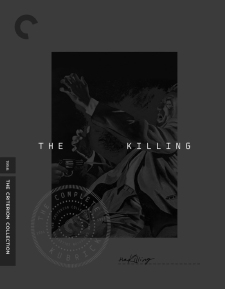
The Killing was Stanley Kubrick’s third feature film, and it marked his arrival as a major filmmaker—a fact that wasn’t lost on the young director. He had been unhappy with his debut film Fear and Desire and even tried to have it withdrawn from circulation, and while he didn’t go quite that far with his sophomore feature Killer’s Kiss, he still dismissed it as being an amateurish effort. While some directors like Quentin Tarantino seem to have sprung fully formed from the forehead of Zeus, others like Kubrick need to learn by doing. Of course, the reality is that Tarantino and his postmodernist ilk have been building on the lessons that were already learned by other filmmakers like Stanley Kubrick and Ringo Lam; they didn’t necessarily develop their own style as much as they cobbled it together from bits and pieces of the work done by those who came before them. On the other hand, Kubrick did everything the old-fashioned way: by learning from his own mistakes—and those hard lessons paid dividends with The Killing.
In some respects, The Killing is a much more confident and self-assured version of Killer’s Kiss. It’s anything but a remake of that film, but it does rework some of the same themes into a different setting and narrative structure. The fact that both films represent Kubrick’s only foray into film noir provides the common ground between the two, since they share a fatalistic streak that’s less obvious in the rest of his work. While Killer’s Kiss was based on an original screenplay by Howard Sackler, The Killing was Kubrick’s first adaptation of someone else’s work, in this case the novel Clean Break by Lionel White. Kubrick brought in author Jim Thompson to collaborate on the script, and that was an inspired choice since no one did hardboiled crime fiction better than Thompson. The Killing is a caper story that revolves around Johnny Clay (Sterling Hayden), an ex-con who assembles a five-man team to pull off a high-stakes robbery at a racetrack. Since Clay doesn’t trust the criminal class, the team that he puts together consists of ordinary people like track clerk George Peatty (Elisha Cook, Jr.) and rifle expert Nikki Arcane (Timothy Carey). The biggest thing that he requires of them is to keep their mouths shut while focusing on their own parts of the plan, and their failure in that regard proves to be Clay’s undoing. The Killing also stars Colleen Gray, Jay C. Flippen, Vince Edwards, Marie Windsor, and gentle giant Kola Kwariani (aka “Nick the Wrestler”).
The Killing was innovative at the time because Kubrick and Thompson chose to retain the non-linear structure of White’s novel rather than rearrange everything into chronological order. There’s no conventional cross-cutting between the players as the heist unfolds; instead, each of their misadventures is shown sequentially, one after the other. The Killing rewinds time, repeatedly, to break down the same event from different points of view. As a result, audiences have to assemble the various pieces together in their own minds, with the full picture only becoming clear once the final piece falls into place. It’s an interesting structure that forces viewers to become active participants in the process of narrative construction. Unfortunately, United Artists wasn’t comfortable with that approach, so they forced Kubrick to add a voiceover narration in order to clarify things for the audience. Yet ironically enough, the narration actually makes the chronology even more confusing than it would have been otherwise. It provides a needlessly detailed timeline for the events, right down to the minute, and that ends up distracting from the way that the pieces fit together as a whole. Still, it’s a minor misstep in an otherwise nearly flawless film.
The key to following the fractured narrative of The Killing isn’t the unnecessarily detailed timeline, but rather the inevitability of the ways in which everything falls apart. The Killing is the most purely fatalistic of film noir, with the end result being a foregone conclusion before Clay’s scheme has even a chance to begin. Once all of the dominoes have been methodically put into place, nothing can stop them from falling down, one after the other. In Killer’s Kiss, the hapless hero’s plans deteriorate when he falls behind schedule after a random encounter with a couple of drunken Shriners. In The Killing, the linchpin that starts the chain reaction is the classic noir trope of the femme fatale. One of Clay’s accomplices fails to keep his mouth shut, and by putting his trust in the wrong woman, the best laid plans of mice and men can’t possibly prevail.
As the final domino shatters and blows away in the wind, Clay’s girlfriend Fay (Colleen Gray) encourages him to run away. Clay stands there, his shoulders slumped in defeat, and replies, “What’s the difference?” Along with Lee Marvin’s final “Lady, I don’t have the time” in Don Siegel’s brutal version of The Killers, this is one of the single most perfectly fatalistic summations of any film noir ever made. The words are carefully chosen. It’s significant that he doesn’t say “What’s the point,” since that wouldn’t have had the same connotations. Instead, “what’s the difference” implies that Clay grasps that he’s been a prisoner of fate all along. He may no longer be in jail, but his entire life still takes place in a cage of his own making. Even if he escaped from the police, he’d still be living behind bars. Nothing that he could do would ever change that inexorable fact. If there really is no fate but what we make, then he’s already made his own fatalistic bed, and he’s finally ready to lie in it.
Cinematographer Lucien Ballard shot The Killing on 35mm film using Arriflex S and Mitchell BCR cameras with spherical lenses, framed at 1.66:1 for its theatrical release. (This was Kubrick’s first time working with another cinematographer, and the two of them didn’t see eye to eye; Kubrick ended up playing a guiding role with the lighting and camerawork over the objections of Ballard, who stopped even watching the dailies after a certain point.) This version uses Kino Lorber’s 4K master, which was based on 4K scans of the original 35mm camera negative. Digital remastering and grading were handled by Duplitech (both Dolby Vision and HDR10 are included). As with Killer’s Kiss, the difference here is that the film has now been encoded by David Mackenzie at Fidelity in Motion (although the actual disc authoring was still handled by NexSpec), and once again, it makes a difference in terms of how the grain is reproduced, with everything looking just a bit more natural and smooth than it does on Kino’s disc with their own encoding.
In practical terms, the actual level of fine detail isn’t significantly improved over 1080p since there was only so much detail to be wrung out of the original negative in the first place. Yet everything still appears ever so slightly crisper and more refined in 4K, especially when examined from up close. Textures like the fabrics in the men’s suits are particularly well-resolved, as are the wisps of cigarette smoke during their planning meeting. The HDR grade strengthens the contrast range and deepens the black levels, but also allows for more subtle gradations between the extreme ends of the spectrum, and the grayscale is flawless. Aside from a few scratches in some of the stock footage, everything is immaculately clean, and it’s worth noting that optical transitions like dissolves were cut into the middle of the surrounding shots, so there’s no degradation to the image other than in the dissolves themselves. Again, I’m not convinced of the need for HDR with vintage black-and-white films, but there’s no getting around the fact that this grade looks excellent.
Audio is offered in English 1.0 mono LPCM, with optional English SDH subtitles. The audio was remastered from the original 35mm mag tracks, with work performed in-house at Criterion. It’s a step up from the mono track on Kino Lorber’s disc, which had more prominent background hiss, crackle, and other minor defects. It sounded a touch harsh overall, but this version sounds cleaner and smoother, with less sibilance to the dialogue. (The barest hint of the background noise can still be detected during some of the dialogue scenes, but it’s never distracting.) Gerald Fried’s brash, bombastic score for The Killing has a decent amount of heft to it despite the source and the nature of the original recording.
There are no extras on the UHD, but the following extras are included on the Blu-ray only:
DISC FOUR: BD
- James B. Harris (HD – 21:07)
- Sterling Hayden (Upscaled SD – 23:40)
- Polito on Thompson (HD – 18:42)
- Trailer (HD – 1:48)
The extras are all carried forward from Criterion’s 2011 Blu-ray. James B. Harris is a 2010 interview with the producer, who first met Kubrick thanks to their mutual friendship with Alexander Singer. Harris is the one who brought Clean Break to Kubrick’s attention, while Kubrick suggested using Jim Thompson as a screenwriter. Harris details the complicated process of setting up their deal with United Artists and then breaks down the making of The Killing, including Kubrick’s conflicts with Lucien Ballard.
Sterling Hayden consists of excerpts from a couple of 1984 episodes of the French television series Cinéma cinemas, in English but with forced French subtitles. The actor, writer, and unabashed maverick offers an overview of his career, saying that he made the unusual progression of starting at the top with The Asphalt Jungle and working his way down from there. He discusses his flirtation with the Communist Party and his willingness to name names before the House Committee on Un-American Activities (a weakness that he acknowledges is the only moment in his life that he’s genuinely ashamed of), and he also describes his experiences working with Stanley Kubrick on The Killing and Dr. Strangelove.
Polito on Thompson is with Robert Polito, author of the book Savage Art: A Biography of Jim Thompson. Polito covers Thompson’s work with Kubrick, not just on The Killing but also doing rewrites on Paths of Glory, as well as the difficulty in adapting Thompson’s own novels for the screen and his complicated cinematic legacy.
Once again, Criterion isn’t including Kino Lorber’s commentary with Alan K. Rode from their 2022 UHD, but there are a few other things missing this time as well. Arrow’s 2015 Region B Blu-ray included in an isolated music & effects track; an interview with Michael Ciment; a 1970 interview with Hayden; and an appreciation by Ben Wheatley. Needless to say, you’ll want to hang onto those discs for the extras alone, but Criterion’s superior encoding of Kino’s 4K master makes this The Killing to beat.
THE KILLING (FILM/VIDEO/AUDIO/EXTRAS): A-/A-/B/C
DISCS FIVE & SIX: PATHS OF GLORY
On March 10, 1915, French division general Géraud Réveilhac ordered the 21st Company of the 336th Infantry Regiment to cross a particularly deadly section of No Man’s Land and retake a German-occupied position near Souain in northeastern France. The audacious but foolhardy assault was doomed before it started when the artillery barrage that was intended to soften up the German lines fell short and landed right in front of the French positions instead, rendering that stretch nearly impassable. The first wave out of the trenches was instantly wiped out, and the remaining elements of the 21st (which was already suffering from low morale) refused to follow them. Réveilhac was furious, so he ordered his own artillery to bomb their position in order to force them out of the trenches, but the artillery officer in command refused to do so without written orders—and however upset that Réveilhac may have been about having his orders disobeyed, he was still canny enough not to put his name in writing on that kind of thing.
Yet Réveilhac found another way to vent his frustrations. Five days later, on March 15, he announced that twenty-four members of the 21st would be court martialed. The number was purely arbitrary, as was the selection of soldiers, with Réveilhac ordering the company commander to pick six corporals and eighteen privates to face judgement as an example to the others. The tribunal took place the following day and they were sentenced to death, but all of the privates and two of the corporals received a stay of execution. That left just four corporals to face the firing squad: Louis Victor François Girard, Lucien Auguste Pierre Raphaël Lechat, Louis Albert Lefoulon, and Théophile Maupas. The sentence was carried out that afternoon, witnessed by the entire 336th Regiment—Réveilhac’s message was received, loud and clear.
The Souain Corporals Affair, as it came to be known, inspired author Humphrey Cobb to write his 1935 novel Paths of Glory, which fictionalized details like the characters, the exact location, and even the regiment involved (he changed it to the 181st), but otherwise followed the broad stroke of the real events in 1915. His title, however, was taken from English poet Thomas Gray’s otherwise unrelated 1751 poem Elegy Written in a Country Church-Yard, which neatly sums up the main theme of the book:
“The boast of heraldry, the pomp of pow’r,
And all that beauty, all that wealth e’er gave,
Awaits alike th’inevitable hour.
The paths of glory lead but to the grave.”
Stanley Kubrick was doubtless aware of all that, including the source of Cobb’s title (after all, we’re talking about the same director who would end his later film Barry Lyndon with Thackeray’s epigraph “Good or bad, handsome or ugly, rich or poor, they are all equal now”). Kubrick had read Cobb’s novel as a teenager, and when he was looking for a follow-up project to The Killing, Cobb’s novel was available. Together with his producing partner James B. Harris, they acquired the rights to it, but they had a difficult time getting anyone to bite on financing for such inherently downbeat material. Their fortunes turned after they sent the project to Kirk Douglas, who agreed to star and help produce the film under his Byrna Productions banner, with Kubrick’s Killer’s Kiss and The Killing distributor United Artists putting up the money.
Kubrick wrote the script for Paths of Glory with assistance from both Calder Willingham and The Killing screenwriter Jim Thompson (a convoluted process that led to arbitration from the Writer’s Guild). Like Cobb before them, they ended up changing details like some of the characters, the exact location, and even the number of the regiment (now called the 701st despite the fact that France fielded barely half that number of regiments during World War I). Yet also like Cobb, they still followed the broad strokes of the Souain Corporals Affair, although they took the story a bit farther than he did (more on that in a moment).
In Paths of Glory, Brigadier General Mireau (an oily George Macready) has been asked to take a well-defended German occupied position known as the Anthill. He knows that it’s an impossible mission, but he’s extremely ambitious—a fact that Major General Broulard (an even oilier Adolphe Menjou) knows all too well, so Mireau is easily manipulated into agreeing with the suicidal plan. Of course, it helps that he won’t be on the front lines, with that task delegated to the commander of the 701st regiment, Colonel Dax (Douglas). After everything goes sour, Mireau wants blood, and lots of it, but Broulard convinces him to pick only three men to face court martial as an example to the others. Naturally, Mireau also delegates that particularly onerous task, and the cruel lot falls on the following men: Corporal Paris (Ralph Meeker), Private Arnaud (Joe Turkel), and Private Ferol (Timothy Carey). Dax is furious about the whole affair, and as a former criminal defense lawyer, he asks to defend the accused. Yet the results of the trial were a foregone conclusion before it even started.
There’s an element of class warfare in Paths of Glory, with the brass remaining safely ensconced behind enemy lines, eating expensive meals and attending fancy dress balls, while the enlisted men suffer and die on the front lines under the most horrible of conditions. It’s all just a chess match for the generals, except that every single one of the pieces on the board are little more than pawns in their trivial games—there aren’t any kings or queens in the trenches. Kubrick was fascinated by the dehumanizing nature of military training (a theme to which he later returned to with Full Metal Jacket), but in Paths of Glory, the most dehumanized characters are ironically the most comfortable ones. They maintain their distance from the front in order to retain their distance from the humanity of the men who they thoughtlessly send to certain death.
Cobb’s novel ended on the killing grounds after the trial, with the final coup de grâce being delivered to each of the accused, one after the other. Of course, reality is often stranger than fiction, and in the real Souain Corporals Affair, the French High Command commuted the death sentences just two hours after the men had already been executed. (19 years later, in March of 1934, the Cour spéciale de justice exonerated all four of them, thanks in no small part to the tireless efforts of one of the family members.) And while General Géraud Réveilhac suffered no immediate consequences, he was relieved of his command the following year after yet another failure to control his troops (although in a further irony, he was later honored as a Grand Officier of the Légion d’honneur, and he died peacefully in his bed in 1934).
Kubrick chose to extend the ending of Paths of Glory by adding an additional scene where General Mireau gets his comeuppance from Major General Broulard, but he still omitted the bitter paradox that the death sentences were commuted ex post facto. Instead, he offers a scene between Broulard and Dax that’s arguably the weakest moment in an otherwise nearly perfect film, with Dax denouncing Broulard’s role in the whole affair in somewhat didactic fashion, spelling out the themes of the film that were already perfectly clear without being verbalized. Simply noting that the High Command commuted the sentences two hours after they were carried out says more about the injustice of military justice than any statement by Dax possibly could.
Yet even if that is a minor misstep in Paths of Glory, it’s immediately forgiven by the remarkable coda that Kubrick and his collaborators added afterward. As Dax leaves, he overhears his men carousing noisily in a nearby tavern, so he walks over to see what’s happening. The innkeeper produces a frightened German girl (Susanne Christian, aka Christiane Harlan, soon to become Christiane Kubrick), who is met by jeers and leers from the French troops. Yet as she starts to sing the German folk song Der treue Husar, they quiet down as soon as they recognize the tune, and while they can’t understand the German lyrics, they start humming along with her, the nostalgic tears that roll down their cheeks matching her own fearful ones—and this time, Dax has nothing to add.
It’s an anachronistic moment, because while various versions of the words to The Faithful Hussar date back to the 18th century, the tune that’s still familiar today wasn’t actually published until 1924. (In yet another irony, Vera Lynn recorded it the same year that Paths of Glory was released, unintentionally crossing paths with Stanley Kubrick in 1957 seven years before they met again for Dr. Strangelove.) It’s still an astonishingly powerful ending for the film, with soldiers who have been dehumanized through military training forcefully being reminded of their own humanity—and of the humanity of those who they consider to be enemies. It also reminds them of the loved ones who they’ve left behind and may never see again thanks to the careless indifference of the generals who keep playing a pointless game:
“A long black coat, I must now wear.
A sorrow great, is what I bear.
A sorrow great and so much more,
My grief it will end nevermore.”
Cinematographer Georg Krause shot Paths of Glory on 35mm film using Mitchell and Arriflex 35 IIA cameras with spherical lenses, framed at 1.66:1 for its theatrical release. (The advantage to using a German cinematographer was that German union rules allowed Kubrick to operate the camera himself, offering him a level of control that he wouldn’t have had otherwise.) This version also uses Kino Lorber’s 4K master, which was based on 4K scans of the original 35mm camera negative, with digital remastering and grading handled by Duplitech (both Dolby Vision and HDR10 are included). Once again, the difference is that the film has now been encoded by David Mackenzie at Fidelity in Motion (although the actual disc authoring was still handled by NexSpec), an unsurprisingly, that’s where this release shines.
Given the relatively low-light shooting conditions at night and in the trenches, Paths of Glory is a particularly grainy film (although bright daylight scenes like the execution clearly used different stocks and are much more fine-grained). FiM’s encoding handles all of it better than Kino Lorber’s did, with a more organic presentation, although the differences are slight and only visible if you go looking for them. There are still a few areas with swarming grain that looks noisy, like on the bright areas at the edges of the map behind Dax at 13:21, but those aren’t so much compression issues as they’re an example of HDR accentuating (and arguably exaggerating) the grain. There’s little in the way of damage or other blemishes visible, and the grayscale, contrast, and black levels are uniformly excellent. There’s little to criticize here.
Audio is offered in English 1.0 mono LPCM, with optional English SDH subtitles. The audio was remastered from the 35mm mag tracks held by UCLA archivist Robert Gitt, with work performed in-house at Criterion. It’s a great mono track for a film of this vintage, with plenty of sparkle on the top end—not exactly a lot of air, but the highs provide impressive clarity to the dialogue without having too much sibilance. Effects like the artillery explosions and the gunfire almost sound like modern recordings. The low end doesn’t have the same kind of extension, and the dynamics aren’t the widest, but it’s still an extremely effective mono presentation. Paths of Glory was Gerald Fried’s final (and finest) score for Kubrick, and it benefits greatly from the overall clarity of the track.
The following extras are included:
DISC FIVE: UHD
- Commentary by Gary Giddins
DISC SIX: BD
- Commentary by Gary Giddins
- Stanley Kubrick (HD – 2:18)
- Kirk Douglas (Upscaled SD – 29:29)
- James B. Harris (HD – 21:09)
- Christiane Kubrick (HD – 6:59)
- Jan Harlan (HD – 9:08)
- Théophile Maupas (Upscaled SD – 3:12)
- Theatrical Trailer (HD – 3:01)
The extras are all carried forward from Criterion’s 2010 Blu-ray (note that this is just a repressing of that disc, not a remastered Blu-ray). They start with a commentary by critic Gary Giddins, author of Warning Shadows: Home Alone with Classic Cinema. Giddens did his research and brings the receipts, even reading selected passages from Cobb’s novel. He also offers details about the production; stylistic and thematic analysis; and comparisons to Kubrick’s other films and modern war films. There’s a ton of good information here, which Giddens delivers energetically, never letting things lag for long.
Stanley Kubrick is a 1966 audio-only interview with the director, conducted by Jeremy Bernstein. It’s a brief (very brief) overview of the background of the production, the reception that the film received in 1957, and Kubrick’s relationship with Christiane. Kirk Douglas is a 1979 segment from the long-running British talk show Parkinson, with Douglas telling a variety of stories about his life and career (he calls it “a corny American story”) and briefly touching on his experiences working with Kubrick—well, on Paths of Glory, anyway, as he barely references Spartacus. It’s a lively interview with Douglas in rare form, and while it’s at best tangentially related to Kubrick, it’s still a helluva lot of fun. Théophile Maupas is a short 1997 segment from the French Television program JT Basse Normandie, focusing on one of the four corporals executed in 1915.
The rest of the extras consist of interviews conducted by Criterion. James B. Harris discusses his collaboration with Kubrick and the challenges in making Paths of Glory, not just the torturous process of getting it financed, but also unexpected issues like Timothy Carey’s erratic behavior (both onscreen and off). Harris even addresses criticisms like the incongruous accents in the film. Christiane Kubrick explains how she met Stanley, her role in Paths of Glory, singing The Faithful Hussar, the themes of the film, and why she left acting to return to painting. Jan Harlan features Christiane’s brother and Stanley’s longtime associate offering his thoughts about the director’s work as a whole, including Stanley’s willingness to allow historical anachronisms creep in as long as they supported the effectiveness of the films.
That’s all of Criterion’s previous extras, though once again they haven’t included the commentary track (by Tim Lucas in this case) from Kino Lorber’s 2022 UHD. They also haven’t included any of the extras from Eureka’s Masters of Cinema Blu-ray and UHD releases in the U.K.: a commentary by Adrian Martin and an isolated music & effects track, plus interviews with Peter Kramer, Richard Ayoade, and Richard Combs. As usual, you’ll want to hang onto those discs for the extras alone, but Criterion’s own slate of supplements is quite good, and their 4K presentation of Paths of Glory has a small but clear edge. It’s a winner, and Paths of Glory is a winning example of the losing game of war.
PATHS OF GLORY (FILM/VIDEO/AUDIO/EXTRAS): A/A/A-/B
DISCS SEVEN & EIGHT: SPARTACUS
In the decades since Spartacus was first released in 1960, the legendarily troubled nature of its production has in some ways overshadowed the legends surrounding the real-life Spartacus himself. In terms of cinematic history, at least, the significance of the historical figure has been overshadowed by the fabled clashes between the screenwriters, the directors, and a narcissistic lead actor who wasn’t afraid to throw his weight around as executive producer. Few of them were entirely happy with the final result, but Spartacus has stood the test of time as a paradigm of classic Hollywood epic filmmaking. The myriad disagreements over the nature of the story may have muddled its message somewhat, but that unintentional ambiguity has helped to give Spartacus a timeless quality that it may not have possessed otherwise. Rather than being a simplistic revolutionary parable, it’s an open text that can be interpreted different ways in different contexts. Yet it was still an undeniably rocky journey to reach that point.
While Spartacus may not bear the imprint of a single auteur, the prime mover behind the project was Kirk Douglas, who developed this adaptation of Howard Fast’s 1951 novel under his Byrna Productions banner with Universal Studios putting up the financing. Fast had written Spartacus while serving a three-month sentence for refusing to name names before the House Committee on Un-American Activities, and he published it himself after all of the major publishers blacklisted him. The troubles for the cinematic version of Spartacus began during the scripting phase, with Douglas initially hiring Fast to handle the adaptation, then replacing him with Dalton Trumbo instead. There was just one problem: Trumbo was blacklisted in Hollywood, a member of the notorious “Hollywood Ten” who had refused to answer questions before the HUAC back in 1947. That wasn’t an issue in terms of getting the work done, since Trumbo had continued to write during that period with other people getting the credit for it. That led to another legend regarding Spartacus, but hold that thought for a moment.
Despite any fluctuations surrounding the script, Douglas managed to attract an all-star cast that included Laurence Olivier as Crassus, an autocratic member of the Roman Senate; Charles Laughton as Gracchus, the populist thorn in the autocrat’s side; Peter Ustinov as Batiatus, the mercurial and weak-kneed owner of the gladiatorial school that trains Spartacus; Tony Curtis as Antoninus, house slave turned revolutionary; John Ireland as Crixus, former gladiator and faithful lieutenant to Spartacus; Herbert Lom as Tigranes Levantus, a conniving Cilician pirate; and John Gavin as Julius Caesar. Other roles were filled out capably by the likes of Nina Foch, John Dall, Joanna Barnes, Charles McGraw, and Woody Strode, but one bit of casting ended up exemplifying the chaotic nature of the project as a whole: Sabine Bethmann as Varinia, wife to Spartacus. Bethmann only survived a few days on the production before being replaced—and she wouldn’t be the only one to suffer that indignity, either.
Douglas originally hired Anthony Mann to direct Spartacus, but then removed him a week into filming for reasons that have never been entirely clear. Douglas claimed that Mann couldn’t handle the scope of this kind of production, but considering that Mann’s next two films were the no less epic El Cid and The Fall of the Roman Empire, he proved beyond the shadow of a doubt that he was perfectly capable of handling productions of this scale. The only footage shot by Mann that remains in the final cut of Spartacus is the opening sequence set in the quarry, and it’s remarkably assured. In fact, that scene arguably established the tone and the style for the rest of the film, so the aspiring young auteur who ended up replacing him had no choice but to follow suit. Needless to say, that led to further trouble.
Douglas ended up replacing Mann with his Paths of Glory director Stanley Kubrick, but whatever harmony that the two of them may have had together during that production wasn’t going to be repeated this time. Directing a studio production of this scale was certainly a golden opportunity for Kubrick, but he had already chafed against having to make relatively minor compromises with United Artists on Killer’s Kiss and The Killing. Like Spartacus, Paths of Glory had been produced under the aegis of Byrna Productions, but Douglas gave Kubrick relative freedom to develop the story in his own distinctive manner. But Paths of Glory cost less than $1 million, and there was no way that an expensive, large-scale studio production like Spartacus was going to afford Kubrick the same kind of freedom. So, he voluntarily surrendered that freedom to become a slave to Byrna Productions and Universal Studios instead. That went about as well as anyone could have (or rather should have) expected. Like the slaves in Spartacus, those who have tasted freedom will never be content being reduced to servitude again.
Kubrick ended up being unhappy with Spartacus since he was little more than a director-for-hire on the project; he wasn’t allowed to develop the story as he saw fit or to put much of his own personal stamp on the production. Douglas didn’t get along with Kubrick any better than he had with Mann, and the conflicts between the two were indeed the stuff of legend. Cinematographer Russell Metty also chafed under Kubrick’s active control over the lighting and the camerawork—Metty even walked off the set at one point. Kubrick is also the one who decided to replace Sabine Bethmann since he wasn’t happy with her lack of visible emotion, and he even pretended to fire her at one point just to provoke a reaction out of her. Fortunately, Jean Simmons was available and had already campaigned for the role, but all of the practical chaos inadvertently mirrored the conceptual chaos that had plagued Spartacus since its inception.
The nature of the story changed all throughout its development (Kubrick later said that Spartacus had everything but a good story). Dalton Trumbo saw the character of Spartacus as more of a symbol than as an actual man, and he wrote lengthy notes to the studio comparing his vision of a "large Spartacus" as opposed to the "small Spartacus" that he felt the production was actually delivering. Howard Fast said that the rough cut was nothing more than a series of disconnected scenes without any sense of narrative flow; he claimed that he was brought in as a fixer and wrote twenty-seven additional scenes in order to tie all of it all together. Peter Ustinov said that he actually wrote his own scenes with Charles Laughton, and there were doubtless other uncredited writers involved as well. Even the ending of Spartacus became a matter of dispute; Kubrick objected to the famous “I am Spartacus” sequence since he felt that it was trite, but Douglas overruled him. Needless to say, there was never any coherent shared vision regarding the kind of story that Spartacus was supposed to deliver in the first place.
Yet in terms of the writing, one of the biggest legends about Spartacus was actively promoted by its lead actor and executive producer: Douglas happily (and repeatedly) took credit for “breaking the blacklist” by pushing to give screen credit to the blacklisted Trumbo. Of course, the reality was far more complicated than Douglas was ever willing to admit. Otto Preminger had already announced months earlier that Trumbo would be given screen credit for writing Exodus; Spartacus merely beat Preminger’s film into the theatres. Regardless, the real breaking of the blacklist began in television, not on film, and a few years prior to either Exodus or Spartacus. It was also an evolutionary process rather than a single revolutionary event, and one that continued for many decades after that—in Trumbo’s case, his screen credit for writing Roman Holiday wasn’t officially restored until 2011. The wheels of justice turn slowly, indeed.
Regardless of all the chaos and legends surrounding the making of Spartacus, the reality is that while some films stand the test of time because they’re the results of one clear vision, others endure not just despite a lack of a singular vision, but arguably because of it. Many classic Hollywood films like Casablanca and Gone with the Wind fall into the latter category, and so does Spartacus. Regardless of whether or not Fast, Trumbo, Douglas, Kubrick, or anyone else involved felt that the finished film accurately represented what they originally wanted to say, the tale that Spartacus tells isn’t just timeless; it was eerily prescient in ways that none of them could have possibly anticipated. The character of Spartacus may not have been as “large” as Trumbo wanted him to be, but his antagonist Crassus certainly turned out that way. Setting aside the question of the failed slave revolt, the real story of Spartacus is ultimately about how an authoritarian politician uses a popular uprising as an excuse to consolidate power and ruthlessly destroy the republic, all with the tacit approval of the Senate. Sadly, that’s a story that only becomes more and more relevant with each passing year.
Cinematographer Russell Metty shot Spartacus on 35mm film (in Super Technirama 70 format) using Technirama cameras with anamorphic Delrama lenses (the opening titles may have a Panavision logo in them, but Panavision lenses were only used at the printing stage, not during principal photography). Similar to VistaVision, Super Technirama 70 ran 35mm film through the camera horizontally with 8 perfs per frame, but the difference was that a 1.5 anamorphic squeeze was applied at the same time. Since the frame height matched that of 70mm film, 5 perf 70mm prints were produced by simply unsqueezing the image in the printer, resulting in a full frame 2.20:1 image. (35mm prints were anamorphic 2.35:1 instead.)
Spartacus suffered badly over the years, from issues with censorship to having the negative cut to 161 minutes for a 1967 rerelease. Worse, when Robert A. Harris undertook a photochemical restoration for a 1991 rerelease, he discovered that the camera negative had deteriorated too far to be usable, with the yellow layer nearly gone. As he explained to American Cinematographer that year, he had to use the black-and-white protection masters instead, but since those were also in horizontal Super Technirama 70 format, that caused additional issues since the equipment that they needed no longer existed. Some of the trims were missing, too, so he used what elements that he could, with at least one of them missing sound (the notorious “oysters and snails” scene was redubbed by Tony Curtis, but Anthony Hopkins stepped in to impersonate the recently deceased Laurence Olivier). Other material was simply gone for good. But he was able to restore the film to the 197-minute length as approved by both Stanley Kubrick and Kirk Douglas. The results were two additional steps removed from the camera negative, so this version of Spartacus was a bit grainier than what audiences would have seen in 1960, but it was the best that he could do (and as someone who saw one of the 70mm prints back in 1991, I can vouch for the fact that it looked fantastic).
This version is Universal’s 2015 digital remaster, which went back to the original camera negative and scanned it in 6K, using newer tools to recover what they could from the decayed Y layer. Missing sections were scanned from the separation masters instead, as well as portions from the new 65mm negative that was produced in 1990. The remastering workflow was completed in 4K resolution end-to-end, with work done by NBCUniversal StudioPost, Warner Bros. Motion Picture Imaging, MTI Film, and Prasad Digital Film Technology. (Both Dolby Vision and HDR10 grades are included here). As with most of the rest of this set, film encoding has been handled by David Mackenzie at Fidelity in Motion, while disc authoring was by NextSpec.
While Universal once had a reputation for issues with a heavy-handed use of digital tools (often scrubbing things clean with noise reduction and then applying heavy sharpening to compensate for the lost detail), that was largely a thing of the past by the time that they released their own UHD in 2020. However, they were still using an encoder that sometimes struggled with chroma, which was visible as blotches in fast moving flames like the ones during the final battle. That’s been fixed in this version, but in most other respects, it’s not a significant improvement over Universal’s disc. The grain might be just a touch more refined and natural looking, but that’s marginal at best. Any way that you slice it, this is a great 4K presentation of the film, with an abundance of fine detail visible throughout. The optical transitions were all originally printed A/B roll, so they’ve been recreated digitally here and the image remains pristine. (The double exposures during the massing of the Roman army in the final battle look as wonky as ever in 4K, but there’s nothing that can be done about that.) The colors and contrast all look fantastic, accentuated in HDR but still in keeping with older versions of the RAH restoration. It’s not quite reference quality, but it’s damned close.
Audio is offered in English 7.1 DTS-HD Master Audio, with optional English SDH subtitles. Spartacus was originally released in 6-track mag stereo on 70mm prints and optical mono on 35mm prints. The 6-track mix was five screen channels with mono surrounds, so for the 1991 restoration, the extra screen channels were summed into L/C/R, and a new mix was created. That was the basis for subsequent 5.1 versions, including a 7.1 mix for the 2015 Blu-ray and a DTS:X mix for the 2020 UHD. The latter is missing here, as Criterion has stuck with the older 7.1. But it’s no slouch, with the surrounds used in relatively restrained fashion while the focus remains on the front channels (which is true to how the original mix would have sounded). Alex North’s score is given plenty of breathing room, and while the dialogue generally remains locked to the center channel, there are still a few moments of directionalized dialogue that replicate some of what the audience would have heard in 1960. The newly recorded dialogue from 1991 doesn’t match very well, but that’s to be expected, and some of the original dialogue was clearly ADRed. Still, on the whole, it’s a beautifully balanced mix that enhances the experience of watching Spartacus.
The following extras are included:
DISC SEVEN: UHD
- Commentaries:
- Kirk Douglas, Peter Ustinov, Howard Fast, Edward Lewis, Robert A. Harris, and Saul Bass
- Scene-by-Scene Audio Analysis
DISC EIGHT: BD
- Commentaries:
- Kirk Douglas, Peter Ustinov, Howard Fast, Edward Lewis, Robert A. Harris, and Saul Bass
- Scene-by-Scene Audio Analysis
- Supplements:
- Restoring Spartacus (HD – 9:02)
- Deleted Scenes:
- Spartacus Meets Varinia (U.K. Version) (Upscaled SD – 2:03)
- 1967 Finale (Upscaled SD – 2:21)
- Gracchus’s Suicide (Upscaled SD – :54)
- Behind-the-Scenes Footage (Upscaled SD – 5:05)
- Actor Interviews:
- Jean Simmons and Peter Ustinov, 1960 (Upscaled SD – 6:31)
- Peter Ustinov, 1992 (Upscaled SD – 24:27)
- The Hollywood Ten (Upscaled SD – 14:44)
- Promotional Materials:
- Newsreels (Upscaled SD – 4:54)
- Trailer (Upscaled SD – 2:45)
The first commentary was recorded for Criterion’s 1992 LaserDisc release of Spartacus. It’s one of their patented curated tracks, featuring separate interviews with Kirk Douglas, Peter Ustinov, Howard Fast, Robert A. Harris, title designer Saul Bass, and producer Edward Lewis, with all of them edited into appropriate moments during the film. It’s a style of commentary that’s less common these days, with most labels preferring to have participants sit down together and, well, ramble a bit. But this track remains focused throughout, and it’s packed with interesting details—as well as a few juicy bits, especially where Ustinov is concerned. He’s in rare form and doesn’t hold back, especially when he’s impersonating Laurence Olivier and Charles Laughton. In comparison, Douglas is a bit self-serving, but that’s just Douglas being Douglas. Fast is as critical as you would expect, while Harris, Bass, and Lewis are studious and informative. It’s a great track.
The second commentary is also from Criterion’s 1992 LaserDisc, although it’s not really a commentary at all. Instead, it’s a collection of materials including a scene-by-scene analysis from Dalton Trumbo’s notes, read by Michael McConnohie, as well as comments from other collaborators and unused variant musical tracks by Alex North, with Barbara Goodson serving as a sort of moderator, offering clarifying narration along the way. Trumbo is no less critical than Fast, so his notes are equal parts informative and entertaining. The structure here is looser than on the main commentary, so there are some gaps here and there, but it’s also well worth a listen.
Restoring Spartacus was produced for Universal’s 2015 UHD, featuring interviews with content management VP Peter Schade, restoration project manager Seanine Bird, and re-recording mixer John Blum. Unfortunately, it’s pretty generic and it lacks any hard information about what was involved in the process, so it’s easy to skip.
Most of the rest of the extras date back to Criterion’s LaserDisc and DVD releases of Spartacus, although they’ve been shared with some of Universal’s releases as well. The Deleted Scenes include the variant version of Spartacus first encountering Varinia from the U.K. version; the edited finale from the 1967 version, which omitted some shots of Spartacus on the cross; and the only surviving audio of Gracchus dealing with a tearful farewell from his body slave. There’s also a reel of Behind-the-Scenes Footage showing the construction of the gladiatorial school set and some of the actors in training. Mann was still present, so this was shot during pre-production. (The footage is silent, but it’s set to selections from North’s score.) The Actor Interviews include promotional footage with Simmons and Ustinov, as well as a lengthier reminiscence with Ustinov shot at his Swiss home in 1992. The Hollywood Ten is John Barry and Paul Jarrico’s 1950 documentary short that was created to help raise legal funds for their defense. Finally, there’s also a collection of vintage newsreels.
While it’s nice to have Criterion’s original LaserDisc commentary tracks and a few of the other extras reproduced here, as is often the case, they still haven’t carried forward everything else from that set (and the subsequent DVD). Their still frame supplements are missing, which included storyboards, lobby cards, print ads, and even a copy of the Spartacus comic book. There were also photo essays and text descriptions. (Seriously, Criterion, however dated and low-resolution some of your older material may be, just dump all of it onto a single selection at the end of the menu on your modern releases for those of us who want it—it’s like not going to take up major real estate on the disc). Universal’s Blu-ray and UHD releases did include image galleries with some of the same material, and their 2015 55th Anniversary Edition added a new interview with Kirk Douglas that’s not included here—although frankly, other than for archival purposes, it’s not particularly missed. Anyone who prefers the DTS:X mix may want to stick with the Universal disc anyway, but Criterion has the edge here (however slight) in terms of image quality—and since there’s nothing wrong with the 7.1 mix, that’s the most important thing. So, while that edge is smaller here than with some of the other films in the set, it’s still an edge.
SPARTACUS (FILM/VIDEO/AUDIO/EXTRAS): B+/A/A/B+

DISCS NINE & TEN: LOLITA
Stanley Kubrick’s 1962 film Lolita begins where it ends, with Humbert Humbert (James Mason) seeking out his nemesis Clare Quilty (Peter Sellers) at Pavor Manor, Quilty’s opulent New England estate. Everything is in an active state of disrepair, with Humbert having to force his way through the detritus from Quilty’s decadent lifestyle (although in many ways, the disarray comes to represent Humbert’s own fractured mental state). He finally locates Quilty—or someone, anyway—buried under bedsheets, and asks him, “Are you Quilty?” Quilty replies, “No, I’m Spartacus. You come to free the slaves, or sump’n?”
It’s an obvious jab at Kubrick’s recent unsatisfying experience directing Spartacus under the iron thumb of lead actor/executive producer Kirk Douglas. Yet it’s more than just a joking reference, and it ended up being ironic in ways that Kubrick probably didn’t intend. He had chafed at having to make even minor compromises for distributor United Artists on Killer’s Kiss and The Killing, but enjoyed the taste of freedom that he received from them while making Paths of Glory. Helming an expensive studio production like Spartacus was an obvious step backward from that, with Kubrick feeling like a slave under the control of Douglas and Universal Studios. So, it made sense that he stepped even further back into a smaller scale production for his next film, working independently once again alongside his former producing partner James B. Harris. Yet if freedom from artistic servitude is what Kubrick wanted, choosing to attempt an adaptation of Vladimir Nabokov under the strictures of censorship standards in 1964 was a dubious proposition at best.
It’s a paradox that distributor MGM’s marketing campaign openly celebrated, asking “How did they ever make a movie of Lolita” in the trailers and print advertisements. How indeed did they accomplish such a feat? The answer to that question is that they didn’t—not really, anyway. While there’s always a gulf between an adaptation and its source material, the gap between Lolita and Nabokov’s novel is so wide that they’re entirely different beasts—horses of a different color, as it were. Not necessarily in terms of plot; while there are some significant deviations (no pun intended) in that regard, Kubrick’s Lolita still follows the broad strokes of Nabokov’s narrative. No, the differences are as much in term of form as they are of content. To understand that, you need to understand Nabokov—and in understanding Kubrick’s approach to Nabokov, you’ll gain insights into a methodology that he would employ on later projects like A Clockwork Orange as well.
Nabokov wrote Lolita as if it’s a memoir by the late Humbert Humbert, a middle-aged man who has an obsession with young girls aged 9-14, whom he terms “nymphets.” It’s his encounter with 12-year-old Dolores Haze, aka Lolita, that seals his fate, leading to his marriage with her mother Charlotte, Charlotte’s accidental death, Humbert’s sexual relationship with Lolita, his unknowing rivalry with Clare Quilty, and his eventual death in prison while awaiting trial for Quilty’s murder. In other words, Humbert is a pedophile, perhaps more accurately termed an ephebophile, but a rose by any other name would smell just as distasteful. Needless to say, that’s challenging material in any form during any era.
From a literary perspective, Nabokov dealt with those challenges by using language as a distancing device, filling Humbert’s narration with various forms of wordplay, neologisms, allusions, and acerbic critiques of American culture. Humbert is clearly an unreliable narrator, writing his memoirs as a way of defending his own indefensible actions, but it’s not always easy to tell where Humbert’s voice ends and Nabokov’s begins. The sexuality in Lolita is graphic but written allusively, adding further layers of distance between the reader and Humbert’s deviant behavior. The question “how did they ever make a movie of Lolita” isn’t just a reference to the subject matter, but also to a distinctive literary style that simply can’t be translated directly to the screen. Lolita has always been an unfilmable novel, in more ways than one.
So, how did Stanley Kubrick and James B. Harris make a movie of Lolita? In the words of William of Baskerville in The Name of the Rose, with some difficulty. Kubrick first turned to Paths of Glory co-screenwriter Calder Willingham and eventually to Nabokov himself, but while Nabokov received sole screen credit (and an Academy Award nomination) for his equally literary script, the final draft was primarily the work of Kubrick and Harris. Frank portrayals of sexuality and eroticism were out of the question in 1964, and while they retained some of Humbert’s narration from the novel, the literal nature of seeing images onscreen precluded using the majority of Nabokov’s literary distancing devices. Kubrick’s solution was to introduce a distancing device of his own: comedy.
There’s plenty of verbal humor in the book, but Kubrick’s Lolita turns Nabokov’s story into an open comedy of manners, with verbal and visual humor that keeps Humbert’s disreputable actions at arm’s length. Yet while some of that was scripted, Lolita changed irrevocably once Kubrick cast Peter Sellers as Clare Quilty. Sellers improvised wildly while playing Quilty taking on different personas in order to deceive Humbert, distract Charlotte (Shelley Winters), and seduce Lolita. Kubrick was so enamored of Sellers’ performance that it ended up reshaping the film, and it also guided the way that he constructed his next film Dr. Strangelove.
Still, just like Humbert’s actions, not all of the revisions that Kubrick and Harris made were defensible ones. While Nabokov’s Humbert acknowledged that his ephebophilic attraction to his beloved “nymphets” was a lifelong one, Harris told Film Comment in 2015 that “our adaptation was somewhat of a departure, but the way we saw the film was that it was a bizarre love story, and as long as we could make that the main thrust of the film we didn’t have to get into all kinds of... I guess you’d call it the predilection for young girls. We never mentioned the fact that Humbert had any feelings about young girls from the very beginning; it’s just coming in contact with this one, Lolita—who, we made sure when we cast her that she was a definite sex object, not something that could be interpreted as being perverted.”
The film version also omits the inconvenient fact that Nabokov’s Humbert repeatedly tried to drug Lolita with the intention of molesting her in her sleep. And to further avoid “something that could be interpreted as being perverted,” Kubrick and Harris cast 14-year-old Sue Lyon as Lolita, raising her age to the upper end of Humbert’s nymphet scale—and she was treated as a sex object, both onscreen and off. Harris had a good reason for wanting Humbert’s relationship with Lolita to appear as a love story, since he took up a relationship of his own with the underage Lyon (long rumored to have been of a sexual nature, although Harris has refused to comment on those allegations). Lyon acknowledged the impact that the experience had on her, stating in 1996 that “Lolita exposed me to temptations no girl of that age should undergo. I defy any pretty girl who is rocketed to stardom at 14 in a sex nymphet role to stay on a level path thereafter."
And Lyon definitely didn’t stay on a level path, struggling with her career, her relationships, and her mental health until her eventual death in 2019. While Lolita ends with a title card noting that Humbert died in prison, it omits the fact that Nabokov’s Lolita died in childbirth shortly thereafter (and no, the child wasn’t Humbert’s). There weren’t any happy endings for Lolita, and while Lyon lived until the age of 73, she struggled with finding her own happiness after her experiences with Lolita. Stanley Kubrick may have regained his artistic freedom while directing the film (regardless of any compromises that he had to make along the way), but Lyon ended up becoming a slave to her newfound celebrity—and to the exploitation of older men as well. Kubrick’s Lolita may be a comedy of matters, but as with any story involving the sexual abuse of minors, this comedy is really the tragedy, “Man,” and its hero the Conqueror Worm.
Cinematographer Oswald Morris shot Lolita on 35mm film using Mitchell BNCR cameras with spherical lenses, framed at 1.66:1 for its theatrical release. Lolita is the one feature film in this set that hasn’t been available previously on UHD, and this all-new 4K master is based on 4K scans of the original camera negative, with scanning and remastering done by Prasad Corporation, while grading was handled by Resilion (both Dolby Vision and HDR10 are included). Warner Bros. supplied a 35mm print that was used as reference for the grading. As usual, the film was encoded by Fidelity in Motion while disc authoring was handled by NexSpec.
The optical work for Lolita is particularly soft, so the opening title sequence doesn’t give a fair impression of how the film looks as a whole. But, optical transitions like dissolves are generally cut in, rather than affecting the entire leading and trailing shots, so the majority of the film is absolutely beautiful in 4K. While it’s not a huge upgrade from Blu-ray in terms of fine detail, everything appears remarkably smooth and filmic, with little to no damage and grain that’s always feels like proper film grain, not digital noise—in fact, the texture of that grain is as important to the look of Lolita in 4K as any of the other fine details. It’s another great example of what an expert encoding job can achieve, without a trace of compression artifacts to mar the experience.
Unsurprisingly, the grayscale, contrast, and black levels are all nearly perfect. The HDR grade doesn’t try to enhance the contrast beyond what’s possible on 35mm film, with no unnaturally bright highlights or anything else to spoil the illusion. As is often the case with black-and-white films in 4K, the real advantage comes from the leap to 10-bit color, which quadruples the available gradations along the grayscale compared to 8-bit Blu-ray, and that’s where Lolita really shines in 4K. It’s gorgeous.
Audio is offered in English 1.0 mono LPCM, with optional English SDH subtitles. The audio here was remastered from the original 35mm DME mag tracks, with work performed in-house at Criterion. While the results aren’t quite as revelatory as the remastered mono audio for Paths of Glory, it’s still an improvement over the previous Blu-ray for Lolita. Everything sounds clean and free of significant artifacts, with clear dialogue and great tonal support for the lush score by Nelson Riddle and Bob Harris—syrupy when appropriate, but cheeky when called for, like with the Lolita Ya-Ya song (and since it also plays over the menus on the disc, good luck getting that particular earworm out of your head).
There are no extras on the UHD, but the following extras are included on the Blu-ray only:
DISC TEN: BD
- Jonathan Lethem and Kevin Wynter (HD – 36:11)
- Desperately Seeking Lolita (Upscaled SD – 13:29)
- Vladimir Nabokov (Upscaled SD – 12:37)
- Screen Tests (HD – 4:42)
- Trailers (HD – 1:35, 2 in all)
Lolita hasn’t received any love on home video prior to this point, with all previous releases being bare-bones. So, while there’s only one truly “new” extra here, even the rest of the archival ones are new to disc. The genuinely new one is Jonathan Lethem and Kevin Wynter, a joint conversation between the two authors who previously taught the course “Kubrick and Authorship” at Pomona College in Claremont, CA. They examine the interaction between Kubrick and the authors that he adapted, including his complex relationship with authors that he actually collaborated with like Nabokov. While they naturally devote most of their time to Lolita, they also explore Kubrick’s process of adapting novels like Red Alert and The Shining for the screen, suggesting that the director benefitted from the creative friction that he had with other authors and screenwriters—even when he had no intentions of using their material in the final film.
Desperately Seeking Lolita is a 1987 segment from the French television series Cinéma cinemas, in English but with forced French subtitles. Filmmakers Claude Ventura and Phillipe Garnier open by detailing the challenges that they faced in tracking down Lyons for an interview (they ultimately placed an ad in Variety and crossed their fingers). Lyon appears visibly uncomfortable at times, but she describes the casting process for Lolita and tells a few stories about making the film. She also hints at the personal fallout that she experienced afterward, starting with the promotional tour and press interviews, and explains why she left the film business.
Vladimir Nabokov is a 1958 segment from the CBC television series Close-Up, with Nabokov and critic Lionel Trilling sitting down with host Pierre Breton to discuss the novel. They address the controversy over Lolita, with Nabokov dismissing critics as “old philistines,” and then delve into the satirical tone of the book and the nature of the character of Lolita. Trilling takes the concept of an unreliable narrator to the next level, saying that you can’t trust a writer to explain what he’s done, while Nabokov describes his inspiration for the story.
Finally, in addition to a couple of trailers, there’s also a collection of Screen Tests with Lyon and Mason that was pulled from the Stanley Kubrick Archive and newly scanned by Criterion. The footage is silent, but it’s set here to audio excerpts from an interview with Lyon that was conducted on the promotional tour for Lolita. She tells the unnamed interviewer that she wants to continue being an actor, so this was definitely before her experiences making The Night of the Iguana began to sour her choice of career. It’s not exactly an Easter egg, but it still serves as a bonus extra (even the menu selection doesn’t indicate the presence of the interview).
It may not be an extensive collection of extras, but it’s still a vast improvement over any and all previous releases of Lolita, and the new 4K presentation is no less of an upgrade. Lolita is a problematic film no matter how that you approach it, but it’s still an essential part of Kubrick’s filmography and necessary for understanding his artistic progression.
LOLITA (FILM/VIDEO/AUDIO/EXTRAS): B/A/A-/C+
DISCS ELEVEN & TWELVE: DR. STRANGELOVE, OR: HOW I LEARNED TO STOP WORRYING AND LOVE THE BOMB
Seventeen years after the first nuclear device was detonated at the White Sands Proving Grounds in New Mexico, and two years before Stanley Kubrick unleashed his equally explosive Dr. Strangelove or: How I Learned to Stop Worrying and Love the Bomb on an unsuspecting world, he directed an improbable adaptation of Vladimir Nabokov’s Lolita that may seem completely unrelated, but it actually laid the foundations for his nuclear satire. Since the censorship standards of the day would never have allowed him to address Nabokov’s overt sexuality in an equally direct fashion, he was forced to take a more oblique approach, achieving the same ends through different means. Nabokov had used language, wordplay, and allusive depictions of sexuality as distancing devices, but since Kubrick couldn’t do anything like that on screen, he used broad humor as a distancing device instead. In other words, his version of Lolita was a drama about sex that was disguised as a comedy of manners. Two years later, he flipped the tables by making a comedy about sex that was disguised as a nuclear satire, and just like after the Trinity testing, the world would never be the same again.
The story behind the story of Dr. Strangelove is well known: Kubrick’s fascination with the politics of mutually assured destruction led to him attempting an adaptation of Peter George’s deadly serious 1958 novel Red Alert (which was originally published as Two Hours to Doom under the pseudonym Peter Bryant). Yet as he was working with George on a screenplay for the film, he kept having to discard otherwise sober narrative elements that would have seemed preposterous to audiences, and it finally dawned on him that the material worked better as an open comedy. So, he brought in The Magic Christian author Terry Southern in order to lean into that angle, and thus Dr. Strangelove, or: How I Learned to Stop Worrying and Love the Bomb was born. Well, that’s the bog-standard account, anyway; the problem is that however accurate it may be on a superficial level, it’s facile at best. While there’s plenty of nuclear gamesmanship at play in Dr. Strangelove, Kubrick’s real interests penetrated much deeper (and harder) than that.
Make no mistake: Dr. Strangelove is no mere spoof about “something going wrong with the bomb.” Regardless of all the nuclear shenanigans and global realpolitik on display in the film, it’s really a story about the consequences of something going wrong with male potency. Whenever men feel a sudden loss of virility, mass destruction is always a clear and present danger, thermonuclear or otherwise. Kubrick’s treatment of the subject isn’t particularly subtle, either. Right from the opening credit sequence, rampant male sexuality is first and foremost in Dr. Strangelove, with viewers being treated to the loving but borderline obscene sight of a flying tanker graphically coupling with a long-range bomber, all set to a syrupy string rendition of Otis Redding’s Try a Little Tenderness. Kubrick ended up going farther during the opening credits of Dr. Strangelove than he did in his entire 153-minute adaptation of Lolita, and he was just getting warmed up at that point.
Sex is everywhere in Dr. Strangelove, with most of the characters displaying an active interest in the subject. The unseen Premier Kissoff isn’t just hopping mad; he’s a man of the people who’s also a man, if you follow my meaning. Major T.J. “King” Kong (Slim Pickens) is first glimpsed while reading a copy of Playboy that features “Miss Foreign Affairs” as its centerfold—and she’s really Miss Scott (Tracy Reed), secretary to Joint Chief of Staff Chairman General Buck Turgdison (it’s significant that the only female character in the entire film is presented as a sex object, and for once, that’s defensible from a thematic standpoint). Turgidson (George C. Scott) is aptly named, while Dr. Strangelove (Peter Sellers) is focused on using mutually assured destruction as an excuse to get a rise out of all the male survivors. President Merkin Muffley (Sellers again) is even more obscenely named, and while he’s initially concerned with saving the world, once things go sour, he’s open to Strangelove’s siren call of a non-monogamous sexual future. Even the otherwise straightlaced Colonel “Bat” Guano (Keenan Wynn) is obsessed with rooting out deviated preversion in order to keep America safe for the Coca-Cola company—if he was still around today, he would doubtless spend his retirement policing bathrooms instead.
Of course, the entire plot of Dr. Strangelove is set into motion by General Jack D. Ripper (Sterling Hayden) and his infamous belief that fluoridation has sapped and impurified his precious bodily fluids, but none of that would have mattered to the rest of the world if he didn’t work within a Cold War system that was already little more than a global dick measuring contest. In the eternal struggle of international gamesmanship, what matters the most is the power of one’s weaponry and the size of one’s arsenal. (Or the size of one’s hands, as the case may be.) It’s the fear of being unable to measure up that thrusts the Russians into shooting their wad on a Doomsday machine, since they’ve finally realized that they’ll never be able to last as long as their rival can. Unwilling to accept the fact that the United States has superior staying power, they decide that the only way that they can come out on top is to have a bigger orgasm. In Kubrick’s world of male sexuality run amok, even the act of apologizing becomes a dick measuring contest, as evidenced by one of the film’s classic Bob Newhart-style phone conversations:
“I’m sorry, too, Dmitri... I’m very sorry... All right, you’re sorrier than I am, but I am sorry as well... I am as sorry as you are, Dmitri! Don’t say that you’re more sorry than I am, because I’m capable of being just as sorry as you are... So we’re both sorry, alright? Alright.”
Unfortunately, nothing will ever be right again, because the weapon that Major Kong ends up holding between his legs succeeds where General Ripper’s seemingly fluoride-sapped member couldn’t. When it comes to curing erectile dysfunction, all the Viagra in the world can’t hold a candle to the ultimate version of male potency represented by nuclear weaponry. In Kubrick’s hypersexualized conception of international conflict, Nietzsche’s will to power has become a lust for life that’s embodied, paradoxically enough, by the instruments of death. When men can’t get it up on their own, they erect missiles instead. General Ripper may have blamed fluoride for his inadequacies, but the real source of his lack of potency was the fact that the Cold War just wasn’t hot enough for him to be able to get it up anymore. It’s only once he’s happily cradling a Browning M1919A4 machine gun in his hands, with a reach-around courtesy of Group Captain Lionel Mandrake (Sellers yet again), that he’s finally able to stand tall and proud. The fact that he’s actually shooting his own side isn’t particularly important to him as long as he’s holding onto a hot weapon. Necessity is the mother of strange bedfellows.
The circle-jerk that takes place in President Muffley’s War Room is also driven by a need to feel virile in the face an increasing inability to perform. As the events in Dr. Strangelove spiral farther and farther out of control, the male members of the President’s council have to imagine other ways in which they can reassert their masculine dominance. So, while they await the world’s inevitable doom, they get lost in a wet-dream fantasy where each of them gets to service ten different women in the name of repopulating the Earth. Oh, the sacrifices that men of noble character are willing to make for the sake of humanity at large—except that unlike what the late great Vera Lynn once said, they really won’t meet again, and the joke’s on them. Which means, of course, that Stanley Kubrick’s final joke with Dr. Strangelove is really on all of us—we laugh in order to keep from crying. Kubrick struggled to adapt Red Alert because the preposterousness of the situation felt funny to him, but once he leaned into the humor and accepted the fact that realpolitik is driven by men who feel sexually inadequate, the comedy of Dr. Strangelove became chilling reality. More than six decades later, it rings truer than ever.
God help us all.
Cinematographer Gilbert Taylor shot Dr. Strangelove, or: How I Learned to Stop Worrying and Love the Bomb on 35mm film using Arriflex 35 II and Mitchell BNC cameras with spherical lenses, framed at... well, let’s go there, shall we? Dr. Strangelove was matted to 1.85:1 for theatrical exhibition, but depending on the camera setup, it was actually shot either hard-matted to 1.66:1 or else open matte at 1.37:1. For Criterion’s 1992 LaserDisc version, Kubrick approved an open-matte transfer for the 1.33:1 aspect ratio of standard definition television that ended up shifting between full frame and letterboxed 1.66:1, depending on the original camera setup; and it’s arguable that this release laid the foundation for the decades of confusion and fruitless aspect ratio debates that have followed—and it doesn’t help that Kubrick’s personal assistant Leon Vitali poured plenty of misguided fuel on that particular fire. O my brothers (and sisters) and only true friends, we’ll address all of that shortly, but for now, suffice it to say that it’s probable that 1.66:1 was indeed the intended ratio for Dr. Strangelove regardless of how it ended up being projected (the in-camera mattes alone are strong evidence of that), and that’s the aspect ratio offered here.
This version uses Sony’s 4K master, which has a storied history of its own. The original camera negative for Dr. Strangelove was destroyed at the lab due to over-printing and other damage, so when Grover Crisp oversaw a digital restoration in 2004 for the film’s 40th anniversary, the best available elements were one of two 35mm fine grain master positives struck from the camera negative, a dupe negative, and a 35mm print. Working with Cineric, Inc. in New York, this ended up being the first full 4K digital restoration for a black-and-white film, and it was also recorded back out to film to create a new 35mm negative. The same base 4K remaster was used as the source for Sony’s 2020 Columbia Classics: Volume 1 boxed set, with additional work performed by Roundabout Entertainment in Santa Monica, including a new High Dynamic Range grade—or at least that’s what Grover Crisp’s original liner notes said, because Criterion credits the additional work to Deluxe in Culver City instead, although both of them list Sheri Eisenberg as colorist. Regardless, while Sony’s 4K releases were HDR10 only, this one offers Dolby Vision as well, and the film now has been encoded by Fidelity in Motion while disc authoring was handled by NexSpec.
Despite the fact that the negative is gone, the 4K presentation still manages to be an improvement over Blu-ray, not necessarily so much in terms of fine detail as it is in grain reproduction—and the new FiM encode certainly doesn’t hurt in that regard. Unsurprisingly, the biggest improvements come from the added depth to the grayscale thanks to the fact that 10-bit color offers quadruple the gradations compared to 8-bit Blu-ray, while the HDR grade has been used not necessarily to expand the highlights far beyond what film was originally capable of, but rather to give them greater depth as well. Many of the highlights like bright spotlights tended to look blown-out on DVD and Blu-ray, but they’re now much better resolved, with more detail visible within them. The darkest areas of the screen also display more depth, but keep in mind that Kubrick and Taylor weren’t afraid to let the shadows stay black, so don’t go looking for shadow detail where there isn’t any. It’s all evolutionary, not revolutionary, but it’s still a step up compared to Blu-ray.
Audio is offered in English 1.0 mono LPCM and 5.1 DTS-HD Master Audio, with optional English SDH subtitles. Dr. Strangelove was originally released in mono, and this 5.1 remix was created by Chace Audio (and Criterion doesn’t appear to have done any additional work on the original mono track in this case). As remixes go, it’s not bad at all, mostly taking the original music and effects and giving them some stereo spread and reverberations in the surround channels, but never really straying too far from the character of the mono track. Still, I ended up preferring the original mono, which lacks the presence of 5.1 but is still relatively clean and clear—you’ll never miss a single one of the choice lines of dialogue unless you’re not supposed to hear them clearly, like after the missile blows up near Major Kong’s indefatigable B-52.
There are no extras on the UHD, but the following extras are included on the Blu-ray only:
DISC TWELVE: BD
- Stanley Kubrick (HD – 3:07)
- Mick Broderick (HD – 19:14)
- The Art of Stanley Kubrick (Upscaled SD – 13:50)
- Joe Dunton and Kelvin Pike (HD – 12:13)
- Inside Dr. Strangelove (Upscaled SD – 46:04)
- Richard Daniels (HD – 14:15)
- David George (HD – 10:57)
- No Fighting in the War Room (Upscaled SD – 30:04)
- Best Sellers (Upscaled SD – 18:28)
- Rodney Hill (HD – 7:25)
- George C. Scott and Peter Sellers (Upscaled SD – 7:14)
- Today (Upscaled SD – 4:23)
- Exhibitor’s Trailer (HD – 16:53)
- Theatrical Trailer (HD – 3:24)
The extras are all carried forward from Criterion’s 2016 Blu-ray (note that this is just a repressing of that disc, not a remastered one). Several of them are interviews that were newly produced for that release, starting with Mick Broderick, author of Reconstructing Strangelove: Inside Stanley Kubrick’s Nightmare Comedy and former Professor of Media Analysis at Murdoch University in Australia. The late scholar (he passed away last year) addresses Kubrick’s split with James B. Harris and the way that the director’s working methodologies continued to shift once he took over as sole producer of his films—including his growing insistence on multiple takes in order to get exactly what he wanted. Joe Dunton and Kelvin Pike features cinematographer Dunton and Dr. Strangelove camera operator Pike expanding on the nature of Kubrick’s quest for perfection in terms of camerawork, with an emphasis on Kubrick and Taylor’s use of black-and-white.
Richard Daniels is an interview with the senior archivist at the Stanley Kubrick Archives and coeditor of Stanley Kubrick: New Perspectives. He offers an overview of the archives and how it demonstrates that Kubrick wasn’t a monolithic figure, but rather one who was willing to explore many different ideas and approaches until he finally discovered what he wanted. Daniels also shows how the materials related to Dr. Strangelove prove how the film evolved during the production. David George, the son of Peter George, discusses the nature of Kubrick’s collaboration with his father and compares the book to the film, including where the character of Strangelove (not present in the novel) came from. Rodney Hill, scholar at the Lawrence Herbert School of Communication at Hofstra University in Hempstead, New York, delves further into the archetypes present in the film from Strangelove himself to General Ripper and beyond.
There are two extras that were originally produced for Columbia/Tri-Star’s 40th Anniversary Special Edition DVD in 2004. No Fighting in the War Room examines the real-world nuclear context surrounding the creation of Dr. Strangelove, featuring interviews with James B. Harris, Spike Lee, Roger Ebert, fellow critic Alexander Walker, editor Anthony Harvey, director Joseph McGrath, former Secretary of Defense Robert McNamara, and author/reporter Bob Woodward. Best Sellers features new and archival interviews with Ebert, Harris, Shirley MacLaine, David Frost, Michael Palin, Richard Lester, James Earl Jones, and more, all of them marveling at the force of nature that was Peter Sellers.
There are also two featurettes that were originally produced for Columbia TriStar’s 2001 DVD. The Art of Stanley Kubrick is a tribute to the director that includes interviews with Jones, Harris, Walker, Gilbert Taylor, Anthony Harvey, executive producer Lee Minhoff, biographer John Baxter, production designer Ken Adam, and more. Inside Dr. Strangelove is an eight-part making-of documentary featuring interviews with all of the above and even more, including title designer Pablo Ferro and a wider selection of friends and family of the cast and crew. It breaks down the production and release of the film, including the collision with Sidney Lumet’s Fail Safe and the elimination of the film’s legendary lost “pie fight” ending (with a selection of stills, but no, actual footage from that sequence has never seen the light of day).
Finally, there’s a selection of archival materials including Stanley Kubrick, which is a brief excerpt of a 1966 interview with the director that was conducted by author Jeremy Bernstein; George C. Scott and Peter Sellers, a collection of one-sided promotional interviews shot on the set of the film; excerpts from a 1980 episode of NBC’s Today, with the inimitable Gene Shalit interviewing Sellers; and a collection of trailers including the original extended Exhibitor’s Trailer, which provides a much more in-depth look at the film.
As usual, Criterion hasn’t included most of the extras from their 1992 CAV LaserDisc set, like the 1964 Scopitone My Teenage Fallout Queen; the Duck and Cover propaganda short; and an extensive still-frame supplement. Those have never seen the light of day on any other releases of Dr. Strangelove, but the only other significant things missing here are Stanley Kubrick Considers the Bomb, a brief featurette from Sony’s Columbia Classics: Volume 1 set and solo releases of Dr. Strangelove, plus a separate interview with Robert McNamara and the Picture-in-Picture and Pop-Up Trivia Track that were originally on their 2009 Blu-ray (and ported over to their UHD as well). Since Sony’s UHDs also included Criterion’s extras (albeit under different titles), that means they still have the edge in that regard. So, if this was a standalone release from Criterion, the new encode by Fidelity in Motion probably wouldn’t be enough to recommend it to anyone who already had one or the other of the Sony discs. But as a part of the Complete Kubrick boxed set, it’s another winner in a collection that’s had little to criticize so far (well, aside from the packaging, anyway).
DR. STRANGELOVE (FILM/VIDEO/AUDIO/EXTRAS): A+/A-/B/B+
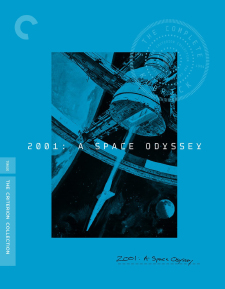
DISCS THIRTEEN, FOURTEEN, & FIFTEEN: 2001: A SPACE ODYSSEY
It’s one of the single most iconic yet enigmatic images in the history of cinema: an impossibly smooth and featureless black slab that towers over all those who gaze upon it. It reflects their desires back at them, whether to dominate their rivals through newfound technology; to slip the surly bonds of Earth using more advanced forms of that technology; or to leave those prosaic baubles behind them in order to reach beyond the infinite. In all cases, this mysterious Monolith ends up reflecting their desire to reach for something greater, and inevitably those who gaze long enough into its featureless black abyss will want to reach out and touch its surface as well—and in touching it, the abyss will gaze back into them, changing them irrevocably. But has it changed all of them for the better? Or, in the two steps forward, one step back for the odyssey of human evolution, has the path of advancement been little more than A Rake’s Progress? In Stanley Kubrick’s 2001: A Space Odyssey, the answers to those questions remain exactly as they should be: entirely in the eye of the beholder.
2001: A Space Odyssey was only moderately successful during its original release in 1968, due in no small part to the fact that general audiences weren’t quite sure what to make of it. But in the revised marketing campaign for its 1970 rerelease, it was billed as “The Ultimate Trip,” a winking reference to the way that the climactic “Stargate” sequence evoked altered states of consciousness. Those three simple words were a far more accurate representation of 2001 than the original marketing campaign’s “An epic drama of adventure and exploration,” and they helped the film to click with the counterculture that would propel it beyond the cinematic infinite. Yet as that revamped tagline demonstrates, 2001 isn’t just the Ultimate Trip; it’s also the ultimate reflection of the minds of those who watch it, just like the Monolith reflects the gaze of Moon-Watcher (Daniel Richter), Heywood Floyd (William Sylvester), and Dave Bowman (Kier Dullea).
Anyone can read as much or as little into 2001 as they wish, and no interpretation is off the table thanks to Kubrick’s fateful decision to strip away exposition and explication in favor of allowing his tantalizingly evocative yet undeniably ambiguous visuals to convey all of the meaning. It’s up to viewers to piece things together as they will, and that process results in people fusing their own perceptions with those of the director. It’s a dialectical clash that synthesizes both perspectives into a unique whole, with none of these individual amalgamations being any more “correct” than any other. 2001 reflects your own perspectives, emotions, and beliefs right back at you, and attempting to reach out and touch this infinite form of expression will change you irrevocably as well.
Granted, there are plenty of people who believe that Arthur C. Clarke’s ancillary novel 2001: A Space Odyssey provides an unequivocal interpretive key for the film, but that misconstrues how the book and the film were developed. The genesis for both of them was Clarke’s short story The Sentinel, first published in the magazine 10 Story Fantasy in 1948. In Clarke’s original tale, a selenologist exploring the lunar surface discovers a pyramidal-shaped crystal artifact of alien origin, and he deduces that it was placed there as a sentinel in order to notify its creators whenever man has achieved sufficiently advanced technology to reach it. Kubrick used the short as a launching point when he was working with Clarke to craft the story for 2001: A Space Odyssey, which ultimately led to both a film version and a novel. But contrary to what some people may think, the film isn’t an adaptation of the novel, and the book isn’t a novelization of the film, either. Both were developed in parallel with each other, and after a certain point during that creative process, they were largely developed separately, with Kubrick focusing on the film and Clarke devoting most of his attentions to the novel—with strikingly different results.
The book takes the basic concept of 2001 and sifts it through the analytical mind of Arthur C. Clarke, while the film filters those same concepts through the unparalleled vision of Stanley Kubrick. Kubrick was perfectly comfortable with ambiguity; Clarke was not. That’s ironic given the fact that Clarke is the one who was responsible for the dictum that “Any sufficiently advanced technology is indistinguishable from magic,” which is as apt of a summation of 2001 as can be given. Yet in practice, he was uncomfortable with that precept and felt a driving compulsion to rationalize everything, even the inherently inexplicable. Kubrick, on the other hand, took Clarke’s third law and ran with it, making his version of 2001 into one of the first (and only) “hard” science fiction films that successfully sails into the mystic, ultimately laying aside Clarke’s relatively grounded physics in favor of overt metaphysics.
Clarke went on to write a whole series of sequel novels, all of which are interesting enough when considered on their own merits, but they continued his efforts to grind the mystic into the mundane. The reality is that by definition, the ending of 2001 precludes any possibility of a true sequel. Since the Star Child is the next stage of human evolution, its further adventures would be beyond our finite human understanding. Kubrick’s film had to end where it did since ordinary human audiences couldn’t follow his preternatural version of the Star Child beyond the infinite. The Star Child represents a tantalizing new beginning, but it’s the end of the road for mankind as we know it. Like the unevolved rival ape tribe during the Dawn of Man sequence, we’ve become obsolete.
As Kubrick and Clarke’s paths diverged during the production of 2001, the film evolved as well. Kubrick eventually rejected the voiceover narration that they originally planned, and he also dropped relatively banal concepts like having images projected on the monolith in order to teach Moon-Watcher’s tribe how to take their next steps. Still, the most significant evolution for the film was an entirely inadvertent one. Kubrick intended to show the aliens who were responsible for the presence of the Monolith, and he tested various techniques to create convincingly otherworldly beings. Some of these ideas displayed appropriately outside-the-box thinking, like using video feedback or shooting a performer covered in monochromatic dots against a dotted background. Ultimately, he was dissatisfied with all of these techniques, so he opted to leave the Monolith as an opaque mystery instead. In the 1970 book The Film Director as Superstar, Kubrick told author Joseph Gelmis that “it soon became apparent that you cannot imagine the unimaginable. All you can do is try to represent it in an artistic manner that will convey something of its quality. That’s why we settled on the black monolith...”
Intentionally or not, the idea that you cannot imagine the unimaginable aligns perfectly with Clarke’s third law, and in choosing to rely on the monoliths as a metonymic representation of an alien species, Kubrick left their actual nature open to interpretation—and yes, absolutely no theory is off the table, including the following one. As Michael Crichton pointed out in his 1987 novel Sphere, it’s nearly impossible to escape our own finite human perceptions when trying to conceive of an alien life form. The reality is that we may not even be able to perceive them at all due to the limited bandwidths of our senses, and it’s highly unlikely that they would resemble the overly anthropomorphic aliens familiar to us from typical science fiction stories. So, using Crichton as the interpretive key to 2001 rather than Clarke, it’s fair to interpret the Monolith not as the creation of a technologically superior alien species, but rather as the aliens themselves—or at least as the only facet that our senses can perceive of entities that exist in different forms in other dimensions. Like Douglas Adams’ hyper-intelligent pan-dimensional beings, the Monolith is just a three-dimensional projection of their true multidimensional forms.
That interpretation adds even more power to the moment when the Monolith appears to the apes during the Dawn of Man sequence. Just as an advanced technology would be indistinguishable from magic, an advanced being would be indistinguishable from God. Not only does the Monolith inspire the evolution of the apes by teaching them how to use tools, but it also inspires their concept of a supreme being. Memories about the appearance of this magical entity would be passed down from generation to generation, with those memories continuously evolving into full belief systems—and given the diversity of human development, those beliefs would also become diverse, leading to different metaphysical philosophies and religions. All of that comes full circle at the conclusion of 2001 when Dave Bowman is reborn as the Star Child. His last gesture as a human being is to reach out and try to touch God, just as his ape ancestors had done millennia earlier. Only then can he evolve to go beyond the infinite.
Of course, that interpretation doesn’t square with Clarke’s novel, and it also doesn’t square with Kubrick’s own comments regarding his conception of the Monolith in the film. But Kubrick is the one who chose to reimagine Clarke’s stodgy crystal pyramid from The Sentinel into something less pedestrian and far more evocative, turning it into an iconic shape that he told Gelmis was “something of a Jungian archetype,” and also removing any direct references to whoever or whatever may be responsible for it. So, it’s fair to interpret the Monolith in Jungian terms as being the Persona of an alien species, the public-facing mask that’s perceptible by finite human beings, while its true Self remains hidden from us until we’re ready to evolve and reach beyond the infinite.
Even from an interpretive standpoint, the Monolith reflects the imaginations of those who gaze upon it. We join Moon-Watcher, Heywood Floyd, and Dave Bowman in wanting to touch its limitless surface, and so Stanley Kubrick’s 2001: A Space Odyssey remains a satisfying enigma rather than an unsatisfying Clarkian exegesis. Kubrick’s Ultimate Trip engages viewers in a way that few other films have ever done, and that’s why it remains as timeless as ever more than a quarter century after the events that it depicts were supposed to have occurred. A few minor details may seem dated to modern eyes (hello, Pan Am), but the film as a whole can never be confined to a single time or place. As a result, 2001 isn’t just the Ultimate Trip, it’s also the Ultimate Text: a work where meaning is as reliant on the mind of the reader as it is on the intentions of the author. It’s not a cold and sterile film, as some shortsighted critics described it in 1968, but rather one that’s vital and alive, always willing to gaze back on those who gaze into its limitless abyss. Once you’ve reached out to touch 2001, it will touch you back, and you’ll never be the same.
Cinematographer Geoffrey Unsworth shot 2001: A Space Odyssey on 65mm film (in Super Panavision 70 format) using Mitchell BFC and FC 65 cameras with spherical Panavision 70 lenses. 70mm prints were full-frame 2.20:1, while 35mm anamorphic reductions were cropped slightly in order to achieve the 2.35:1 ratio. While the 2007 Blu-ray version was scanned from one of these 35mm reductions and was also cropped to 2.35:1, this 2018 4K master was based on 8K scans of the original 65mm camera negative and it’s properly framed at 2.20:1. The foundation for that work was the photochemical restoration done by Pacific Title’s Vince Roth in 1999. As with many films from that era, 2001 was over-printed and some damaged sections of the negative had been replaced with dupe footage, which Roth tried to replace with earlier-generation footage wherever possible—although it’s worth pointing out that they’re still dupes. Fellow restoration expert Robert A. Harris has noted that the lengthy shot of Poole running around the centrifuge began to crack up all the way back in 1968, and several shots during the Dawn of Man sequence (and a few elsewhere) are also dupes that were cut into the negative to replace damaged sections.
Roth’s restored negative was scanned at 8K, with further restoration work and color correction performed digitally by Warner Bros. Motion Picture Imaging, using Roth’s answer print from 1999 and a new 70mm check print from his dupe negative as color reference—and therein lies a bit of controversy of its own. The colorist was Janet Wilson, working under the supervision of Ned Price and Leon Vitali, but at that time, Christopher Nolan was involved with the so-called “unrestored” 70mm prints that were being prepared for rerelease, and along with his own cinematographer Hoyte van Hoytema, they supposedly “consulted” on the new 4K video master as well. That resulted in some people questioning the accuracy of the grade, although it’s also worth pointing out that Harris has stated that it’s “within rational parameters of what is probably either correct or nearly correct.” And in lieu of reference materials of my own, I’m not going to question it. The blacks lack density and can appear elevated at times, but that’s how every 70mm or 35mm print that I’ve ever seen has looked (and yes, I’ve seen multiple 70mm prints, not just the “Nolanized” one). Even Douglas Trumbull noted the challenges that they had in achieving dense blacks due to the production pipeline, telling American Cinematographer in 1968 that “another problem that gave us many headaches was the loss of black density due to multiple duped images being exposed onto one negative... (The precautions that we took) were only partially helpful and any shot involving more than two or three sets of masters would suffer a noticeable graying of the blacks. The solution was to make at least one element in the scene an original unduped image.”
Part of the challenge on home video is with the HDR grades (both Dolby Vision and HDR10 are included), which have been used to accentuate the bright highlights on the spacecraft, evoking the harsh lighting in the vacuum of space, but that’s sometimes at the expense of the density in the blacks. On the whole, though, it’s a more than acceptable compromise, as the image quality is consistently fantastic—even the dupe footage looks spectacular. The difference here compared to the Warner Bros. version is that the film has been encoded by Fidelity in Motion (with NexSpec still handling the actual disc authoring). And opinions are going to vary on this score, but the new encode does seem to have the effect of adding better-resolved grain and greater clarity to the image as a whole, but the differences are miniscule at best (the Warner Bros. disc was pretty damned good in its own right). They’re visible when examining screenshots from up close, less so in motion from normal viewing distances, but the differences are there. Even things like the fine wires holding up Heywood Floyd’s food tray (which to be fair, were never visible on theatrical prints) have just a touch more clarity in this version, looking perhaps a bit more filtered on the Warner Bros. disc. But to quote the Minister of the Interior in A Clockwork Orange, these are subtleties, padre. Either way, it’s a spectacular (if still imperfect) 4K presentation of 2001.
(On a personal note, having watched the Stargate sequence in just about every format imaginable—including a 16mm reduction print—it’s never truly felt like the Ultimate Trip until I finally saw it in 4K with HDR. It’s a genuinely mind-blowing experience, with or without chemical assistance!)
Audio options include the original English 70mm mix reconfigured into 5.1 DTS-HD Master Audio; the 1999 DVD remix, also in 5.1 DTS-HD Master Audio; and 1.0 mono LPCM, all of them with optional English SDH subtitles. 2001: A Space Odyssey was originally released in 6-track mag on 70mm prints; 4-track mag on a small quantity of 35mm prints; and optical mono for the bulk of wide release 35mm prints. The 6-track mix was five screen channels with mono surrounds and no boom track, although Harris has noted that the bulk of the mix was really 4 channel L/C/R/S until the final reel, when all five screen channels were used. This version of the 70mm mix sums up the extra screen channels into L/C/R, so it’s effectively a 4.0 mix in a 5.1 container. Additional audio restoration work was performed in-house by Criterion.
Unsurprisingly, comparing the original 70mm mix to the 1999 remix is challenging since the two tracks aren’t level matched, but even after accounting for that, the remix sounds more powerful and dynamic the moment that Also sprach Zarathustra kicks in as the opening credits begin to roll, with the timpani having significantly more kick. There’s less distortion in the music, too. The tradeoff is that some of the sound effects have been redirected, moving elements from the surrounds into the front channels instead, and some effects that were originally across the front channels have been repositioned. Each of the tracks have different strengths and weaknesses. Personally, I preferred the original mix as a whole, but I had a hard time letting go of the greater clarity and impact to the music in the remix. I ended up switching back and forth depending on the scene, especially whenever Also sprach Zarathustra appears. But you’ll have to audition both and decide for yourself. (By the way, speaking of Zarathustra, the remixed 5.1 track on the previous Warner Bros. UHD had an issue where the music lagged slightly during the opening credit sequence, but it’s been properly synced to the image here.)
The original 35mm mono mix is a new addition for this release, and while it’s nice to have it for the sake of completeness, it’s definitely inferior to either of the 5.1 tracks. It sounds muffled, with greater distortion; while it’s not clear what the source was, it may have been the actual optical tracks on a 35mm print. Regardless, it’s a novelty that’s not really worth your time. Note that since 35mm prints omitted the overture and intermission/entr’acte, those sections will appear silent when selecting the mono track (although contrary to the included booklet, the exit music still plays).
The following extras are included:
DISCS THIRTEEN & FOURTEEN: UHD & BD
- Commentaries:
- Kier Dullea and Gary Lockwood
- Michael Benson
Criterion has added a new commentary for this release, and they didn’t take any chances by bringing in Michael Benson, author of the indispensable monograph Space Odyssey: Stanley Kubrick, Arthur C. Clarke, and the Making of a Masterpiece. Needless to say, he has a wealth of information at his fingertips, including plenty of practical details about the making of the film. He also analyzes 2001 from structural and thematic standpoints, tracing the development of the story and the relationship between Kubrick and Clarke (reading Benson’s book back in 2018 influenced my own thinking about the way that their paths eventually diverged). Benson is perhaps a bit too pedantic at times when explaining things like overtures, intermissions, and roadshow presentations, but to be fair, he’s potentially speaking to broad audiences who may be less familiar with film history than they are with 2001 itself. But that’s a minor quibble in a track that’s otherwise academic but lively and entertaining—and he ends with an appropriate quote from Russian rocket scientist Konstantin Tsiolkovsky: “The Earth is the cradle of humanity, but mankind cannot stay in the cradle forever.”
The archival commentary with Kier Dullea and Gary Lockwood was originally recorded for the Warner Bros. 40th Anniversary Blu-ray and DVD in 2007. Both of them were recorded separately and edited together, essentially intermingling two different interviews, so it’s not always screen-specific, although they do occasionally comment on something as it occurs. They run out of steam toward the end (or else the editors ran out of interview material), but it’s still an invaluable collection of their recollections about making 2001 and the way that it changed their lives and careers.
DISC FIFTEEN: BD
- 2001: The Making of a Myth (Upscaled SD – 59:51)
- Standing on the Shoulders of Kubrick: The Legacy of 2001 (Upscaled SD – 21:25)
- Vision of a Future Passed: The Prophecy of 2001 (Upscaled SD – 21:31)
- A Look Behind the Future (Upscaled SD – 23:11)
- FX and Conceptual Artwork (Upscaled SD – 9:28)
- Universe (HD – 27:44)
- Graphic Films: To the Moon and Beyond (HD – 7:08)
- John Whitney Films:
- 35mm Test Reels (HD – 2:41)
- Byjina Flores (HD – 5:59)
- A Primer for 2001: A Space Odyssey (Upscaled SD – 28:53)
- Douglas Trumbull (HD & Upscaled SD – 15:34)
- Trailers (Upscaled SD – 5:25, 2 in all)
Criterion has also added a new featurette and a collection of archival materials that haven’t been included on previous editions of 2001. Graphic Films: To the Moon and Beyond is a new featurette about the 70mm Cinerama 360° short To the Moon and Beyond that was produced for the 1964/65 New York World’s Fair. Kubrick would end up hiring Graphic Films to work on 2001, although they eventually withdrew, leaving their former employees Con Pederson and Douglas Trumbull to work with Kubrick instead. The featurette also includes rare footage from To the Moon and Beyond, although it’s distorted since Cinerama 360° was intended to be projected inside a dome.
The other “new” extras are purely archival in nature. Universe is an Oscar-nominated documentary short that served as one of Kubrick’s sources of inspiration when he was planning 2001 (and it’s where he first heard the voice of narrator Douglas Rain, who he would end up hiring to voice HAL 9000 in 2001). A Primer for 2001 is a 1971 program from the anthology television series Camera Three, hosted by Kier Dullea. It’s a concise overview of 2001, spelling everything out in a way that Kubrick refused to do in the film itself. It may be useful to anyone who insists that 2001 needs to be clearly explicated, but it’s worth pointing out that it’s still not a definitive interpretation. Douglas Trumbull is newly edited Mick Garris interview with Trumbull that was originally produced for the Z Channel’s “Fantasy Film Festival” in 1981, and while it’s in upscaled standard definition, it’s been recut here to include HD clips from the film. There’s also a collection of slit-scan pioneer John Whitney Sr.’s 1965 test reels that he produced for Kubrick, as well as Byjina Flores, a 1966 short by his son John Whitney Jr. that also makes use of the technique (this was before Trumbull appropriated the idea to create his own slit-scan system).
The rest of the extras are a compilation of featurettes and material from different sources, including most of the extras from the various previous DVD, Blu-ray, and UHD releases. Two of them were archival. 2001: The Making of a Myth is television documentary that was produced in 2001, narrated by James Cameron and featuring interviews with cast and crew members like Clarke, Dullea, Trumbull, Pederson, Daniel Richter, Brian Johnson, and many more, joined by critics Camille Paglia and Elvis Mitchell (Kubrick himself appears via archival footage). While it’s a fairly cursory overview, many of these participants are no longer with us, so it’s another invaluable collection of their thoughts (and there’s some interesting archival footage, too). Note that at nearly 60 minutes, this is significantly longer than the Warner Bros. 43-minute version, but I didn’t compare them side by side in order to determine the differences. A Look Behind the Future, on the other hand, is a promotional documentary that was produced by MGM in 1966, two years before 2001 finally reached the screen.
There are also three featurettes that were produced directly for the 2007 Blu-ray. Standing on the Shoulders of Kubrick includes interviews with other filmmakers like Steven Spielberg, Sydney Pollack, George Lucas, Caleb Deschanel, Peter Hyams, Dan O’Bannon, and Ernest Dickerson joined by effects experts like Phil Tippett, Dennis Muren, and John Dykstra, as well as critics and authors like Roger Ebert, Jay Cocks, and David Hughes. It examines the legacy of 2001 and Stanley Kubrick. Vision of a Future Passed includes interviews with many of the same and more, including William Friedkin and Arthur C. Clarke, focusing on the technology presented in 2001 compared to how reality turned out. FX and Conceptual Artwork presents early concept art for 2001 accompanied by explanatory interviews with Trumbull and Christiane Kubrick.
There are a few extras from the Warner Bros. UHD and Blu-ray releases that haven’t been included here: the What Is Out There? featurette; a montage of Kubrick’s photography for Look magazine; and a lengthy audio-only 1966 interview with Kubrick conducted by Jeremy Bernstein. And even those discs were missing an interview with Clarke that appeared on the 1998 DVD from MGM, which hasn’t been seen elsewhere. And as usual, none of Criterion’s own extras from their 1988 CAV Special Edition boxed set have been carried forward here, including an audio-only interview with Clarke; footage from the Voyager I and Voyager II Jupiter flybys; different John Whitney slit-scan footage; and an extensive still-frame supplement. So, while this is a fantastic selection of extras, it’s not all-inclusive, and you’ll probably want to hold onto the older discs. But in audio-visual terms, this is the best home video presentation of 2001: A Space Odyssey to date.
2001: A SPACE ODYSSEY (FILM/VIDEO/AUDIO/EXTRAS): A+/A/A/A-
(More Coming Soon...)
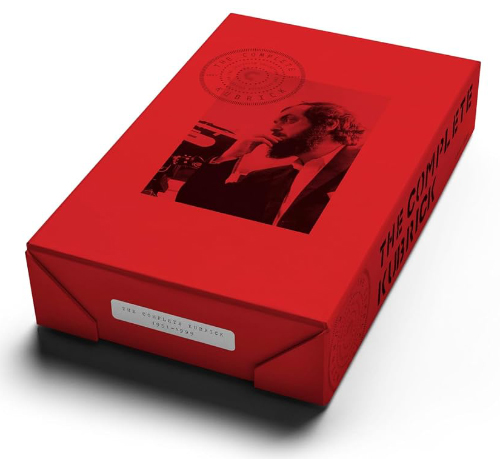
- Stephen Bjork
(You can follow Stephen on social media at these links: Twitter, Facebook, BlueSky, and Letterboxd).