
Demigod: The Legend Begins (Blu-ray Review)
Director
Chris HuangRelease Date(s)
2022 (November 10, 2026)Studio(s)
PiLi International Multimedia (Deaf Crocodile Films)- Film/Program Grade: B
- Video Grade: A-
- Audio Grade: A-
- Extras Grade: B+

Review
The Pili International Multimedia production of Demigod: The Legend Begins opens with the following title card:
“Once upon a time, the warriors of Wulin rallied under the Five Mountains. With the Enlightenment in the East, the Supple Touch in the West, the Evil Brink in the North, the Dark Bier in the South, and the Flying Flame in the Center, the Five Mountains governed Wulin. Today, on the desolate peak of Evil Brink, an uncanny sight unfolds. Under endless thunders, a figure suddenly appears, climbing up the cloud-piercing cliffs with great difficulty.”
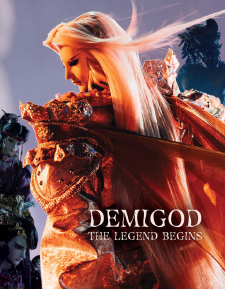
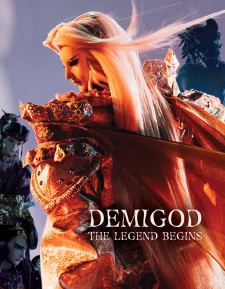
For veteran fans of their Pili television series, that setup should seem comfortably familiar, at least until the figure climbing that cliff is revealed to be none other than longtime Pili protagonist Su Huan-Jen, hauling his drunken master behind him. Wait, what? Su Huan-Jen is just an apprentice? Yes, because Demigod is a prequel, not a sequel, and not just to their previous film Legend of the Sacred Stone, but also to the entire Pili series itself. And the eventual grandmaster Su Huan-Jen isn’t just an apprentice in Demigod, but also a rather flawed and even somewhat arrogant figure who still has much to learn on his path to enlightenment.
None of that will matter for newcomers to the series, but the minor detail that Su Huan-Jen and all of the other human characters in the film are performed by puppets may require some adjustment. But that’s the glory of Pili: it brings the traditions of wuxia and xianxia to life via the equally venerated tradition of budaixi, or glove puppetry. These aren’t the “Supermarionation” marionettes of Gerry and Sylvia Anderson series like Thunderbirds or even an homage to them like Trey Parker and Matt Stone’s Team America: World Police. No, classic budaixi hand puppetry dates back to the 17th century, although it’s found a modern home in Taiwan, where Pili International Multimedia Productions is located. Their Pili television series made its debut in 1984, and the show continues to this very day, with multiple spinoffs and cinematic variants as well.
As with any series that has run for such a length of time, the lore behind Pili is almost impenetrably dense for newcomers, which is why writer/director Chris Huang decided to take a giant leap backwards with Demigod. Su Huan-Jen was already a core figure in the mythology of Wulin, the world(s) in which Pili takes place, and he was a key figure in their first film Legend of the Sacred Stone in 2000. That film assumed familiarity with the lore of Pili and the essence of Su Huan-Jen, but for their follow-up, Huang chose to broaden the appeal by essentially telling an origin story for the character. As a result, there’s more exposition in Demigod and less action, and it does require paying careful attention to what’s happening in order to keep from getting lost. But the rewards for that attentiveness are well worth the effort.
In a nutshell, Demigod is an elaborate tale of intrigue, filled with betrayals and double-crosses in the quest for power. To anyone who enjoys classic tales of wuxia and xianxia, it should all seem comfortably familiar, even if the characters aren’t. The key to Demigod is that while Su Huan-Jen may have become a legend, he clearly wasn’t born that way, and he makes a variety of critical mistakes on his path to achieving legendary status. Huang’s core theme is that success must be accumulated through a number of failures, and that we shouldn’t be afraid of making mistakes on our own journey to success. “The greatest privilege humans can have is the ability to make a good choice,” one of Demigod’s fantastic creatures tells Su Huan-Jen, which implies that in order to exercise that ability, we must have the freedom to make bad choices as well. Only then can we learn and grow (or as another puppet character once told his own apprentice, “The greatest teacher, failure is”).
Chris Huang and his team have learned that lesson as well, improving their techniques as much by finding out what doesn’t work as by what does. And the techniques in Demigod are a huge advance over anything in Pili or even Legend of the Sacred Stone. The wise creature who explains the value of being able to make good choices is Bulbtail Qilin, one of two creations in Demigod that were brought to life via tokusatsu, or “suitmation” effects instead of puppetry, a first for Pili Multimedia Productions And the puppets themselves are much more detailed and expressive than in any of their previous efforts. Yet true to the spirit of budaixi, their faces are still fixed, with most of that expressiveness coming from how their bodies are performed by the puppeteers. And in budaixi tradition, all of the characters are still voiced by Chris Huang’s late brother Vincent, who passed away shortly after Demigod finished production.
So, Demigod is a heady brew of classic budaixi and tokusatsu, mixed with a dash of modern digital visual effect work and more advanced fabrication techniques. Like the story itself, it’s something old and something new, but still 100% Pili. There’s also a liberal dose of broad humor in order to appeal to modern audiences, combined with some genuinely bloody violence and even a touch of scatology. What’s not to love? Demigod is a great introduction to the world of Pili for new fans, but it’s also a refinement of the storytelling and puppetry techniques that have enticed legions of old fans for more than forty years now. It’s essential viewing for fans of budaixi, Pili, and fantastic filmmaking in general.
Demigod: The Legend Begins appears to have been captured digitally, but there’s no information available about the cinematography or this 2.39:1 framed 1080p master. But it advances substantially over the one for Legend of the Sacred Stone. It’s much crisper, cleaner, and more refined, showing off every last detail in the elaborate costuming, from the furs to the intricate needlework. The molded puppets for Demigod were also more detailed than the old-style wooden ones in Sacred Stone, and there’s more subtle texture to the skin on Su Huan-Jen and some of the other puppets. The CGI effects were composited digitally into the background plates and those shots do still look softer than the surrounding material, but everything else is as sharp as 1080p will allow. The colors are also bolder and more vivid than they were in Sacred Stone. Whatever you may think of the relative merits of each film, Demigod definitely has more to offer visually.
Audio is offered in Chinese 5.1 DTS-HD Master Audio, with removable English subtitles. The mix has decent low-end extension, with rumbling thunder and other bass effects adding a little kick to the proceedings. The surrounds are active but never take away from what’s happening on screen, working as support rather than as an end unto themselves. Vincent Huang’s vocal stylings are crystal-clear, and the music also works well to support the dramatic thrust of every scene. Aurally, this is also a significant upgrade over Legend of the Sacred Stone.
The Deaf Crocodile Limited Edition Blu-ray release of Demigod: The Legend Begins includes a 60-page booklet featuring essays by Rupert Bottenberg and Walter Chaw. Everything comes housed in a rigid slipcase with a J-card slipcover, with new artwork designed by Richard Cox. The set is limited to 1,750 units, although a standard release is forthcoming. The following extras are included, all of them in HD:
- Commentary by Ben Wolf Page
- Innovation Within Tradition: How Pili and Demigod Synthesize Millennia of History (16:35)
- Director Interview (22:32)
- The Beginning (2:32)
- Beast (3:17)
- Costumes (3:50)
- Dubbing (2:48)
- Music (4:01)
- Tokusatsu and Visual Effects (5:04)
- Demigod: The Legend Begins Original Trailer (1:59)
- War of Dragons Trailer (3:44)
- Doom of Dragons II Trailer (1:30)
The new commentary features Ben Wolf Page, puppeteer and associate editor of The Puppetry Journal for the Puppeteers of America organization, so he knows his stuff when it comes to Pili and Demigod. (He does recommend listening to his Legend of the Sacred Stone commentary first if you want to learn more about the background of Pili and budaixi puppetry, so that he can focus on new material here). He considers Demigod to be a much richer film than Legend of the Sacred Stone, refining and expanding on the themes and techniques of the first Su Huan-Jen film. He acknowledges that it streamlines and alters the complex mythology of Pili in order to simplify things for new audiences, even if some fans didn’t appreciate that fact. Page breaks down the story, characters, and locations in the film, plus many of the more advanced puppeteering techniques that were used to bring them to life. Unlike Sacred Stone, most of it was shot in the studio, but that gave the filmmakers more control over the fine details in the newly designed puppets, and as a result, Demigod exhibits a richer world as well. He also explains the who the new villain is in the post-credits sequence, a character familiar to longtime fans of Pili.
Innovation and Tradition is a new visual essay by YouTuber Evan Chester, who explores the history of budaixi and the way that Pili drew from that long tradition to establish a new tradition of their own under the guidance of the Huang family (it’s officially recognized as the longest-running puppet series by the Guinness Book of World Records). In films like Demigod, they paid homage to the past while not feeling the need to follow it slavishly. Chester also offers a brief overview of some the mythology and creatures on display in Demigod.
There’s also a continuation of the online interview with Chris Huang that was included on the Legend of the Sacred Stone Blu-ray, conducted by Deaf Crocodile’s Dennis Bartok. It starts with a discussion about the 2010 fire that destroyed many of Pili’s assets and priceless puppets, but thanks to fans bringing in the replica figures that they had purchased, production was able to recommence a few months later. From there, Huang moves on to describe the conception of Demigod and why they opted to make it a prequel instead of a continuation like Legend of the Sacred Stone. He also explains how advances in AI and CGI changed the way that they brought those ideas to life; his working relationship with his late brother; and how later generations of the family are continuing the budaixi tradition. Huang says that Demigod was just the beginning, as they have ambitious plans to produce more feature films on a tighter schedule.
Finally, in addition to a collection of trailers for Demigod and other Pili series, there’s a collection of brief behind-the-scenes featurettes that were produced for the Pili website, most of which are fairly self-explanatory. The Beginning reiterates the conception of the story; Beast explores the new suitmation characters of Swordtail Qilin and Bulbtail Qilin, plus the remarkable animatronic fish; Costumes shows off the “low-key but stylish” design of the intricately detailed costumes; Dubbing shows the late Vincent Huang recording all of the film’s dialogue; Music shows the composition and recording of the score and songs; and Tokusatsu and Visual Effects explores how visual and practical effects supplemented the elaborate sets and suitmation work.
As Bulbtail Qilin says, “The greatest privilege humans can have is the ability to make a good choice,” and the greatest privilege that Deaf Crocodile has offered is the ability to choose their wonderful releases of films like Legend of the Sacred Stone and Demigod. They’ve become the North American home for global fantasy filmmaking, animation, and yes, puppetry, making less familiar Eastern works widely available for Western audiences. Needless to say, their release of Demigod is highly recommended. Choose well.
-Stephen Bjork
(You can follow Stephen on social media at these links: Twitter, Facebook, BlueSky, and Letterboxd).