
Dancing Hawk, The (Blu-ray Review)
Director
Grzegorz KrolikiewiczRelease Date(s)
1977 (March 24, 2026)Studio(s)
Film Polski/Zespól Filmowy Profil (Radiance Films)- Film/Program Grade: B+
- Video Grade: A+
- Audio Grade: A
- Extras Grade: B+

Review

Michał Toporny—this is your life! Starring Franciszek Trzeciak as Toporny, The Dancing Hawk shows the life of a man from birth to death (and possibly three or four alternate realities) in a Polish film many, including director Grzegorz Krolikiewicz, compare to Citizen Kane. Toporny starts life as a peasant farmer, fights in World War II and in postwar, leaves his wife and son behind and joins the ranks of Poland’s Communist backed Socialist government machine in the city. Once there he quickly climbs the ladder and eventually makes the call to convert the woodland area that supports his old life and the people he left behind into lumber. This choice both makes and breaks him. The Dancing Hawk is a convoluted film on a variety of levels. Told in a disjointed POV style (think GoPro strapped to anything and everything to get the shot) and with repeating editing showing alternate “takes” or human choices where we can see him yelling at his secretary, calmly discussing an issue with his secretary, ignoring her or kicking her out of his office all in one scene, it is a difficult film to absorb. It’s odd but fascinating. Not a film I think I’ll ever watch again, but I’m glad I got the opportunity to see it.
I understand the comparisons to Welles’ masterstroke, but for me I felt this film was more comparable to Kurosawa’s Ikiru. In all actuality, it’s the anti-Ikiru. A businessman’s life is shown to us, the audience, and we have more information than we know what to do with. Whereas, in Ikiru, Kanji Watanabe was able to rectify his choices in life and leave something behind. In The Dancing Hawk, Michal will die believing his life didn’t matter and the very evidence of his life is torn down to the foundation and burned in fire. As much as this is Grzegorz Krolikiewicz ’s film, it’s also Academy Award-winning (1983’s Best Animated Short Tango) cinematographer Zbigniew Rybczyński’s. His fingerprints are all over this film from the POV photography to the aggressive sound design. You see this in the special features.
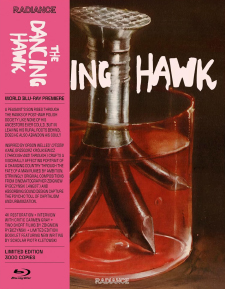
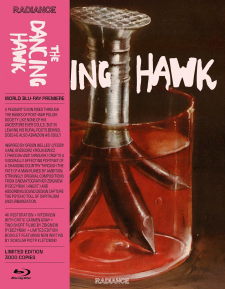
The Dancing Hawk comes to us by Radiance Films, which is quickly becoming one of my favorite boutique labels, in a beautiful 1080p transfer in 1.37:1. Restored in 4K under the consulting supervision of Rybczyński himself, the presentation is beautiful. This could have been shot last week. Detail is crisp, colors are spot on and blacks are deep. There’s a lot to see in this film and you really get to see it. Sound is presented in an LPCM mono track (in the original Polish with English subtitles) but it does some heavy lifting thanks to the sound design. It’s quite playful and very supportive of the film. Extras include a video essay Carmen Gray on The Dancing Hawk which serves as a standalone fast forwarded commentary track, it’s full of great info about the film, the filmmakers and life in postwar Poland. There are also two short films by Zbigniew Rybczyński on board. Both are in his non-traditional surreal animated style with his zeroed in sound design. Soup is a Ralph Bakshi meets Terry Gilliam look at love and marriage and Oh! I Can’t Stop! is a precursor to Sam Raimi’s Deadite camera POV where “something” starts off in the woods and goes forward picking up speed and blasting through man, woman, child, building, fence, car and coming to an eventual splitty stop. Inside the case is a reversible cover and an insert booklet by Polish film critic and essayist Piotr Kletowski.
The Dancing Hawk is dark and difficult but is such a creative force it’s very much worth checking out. If you have the opportunity to rent or borrow, you should seek it out.
- Todd Doogan