
Behind the Green Door (4K UHD Review)
Director
Artie Mitchell, Jim MitchellRelease Date(s)
1972 (November 25, 2025)Studio(s)
Jartech/Cinema 7 Film Group/Mitchell Brothers Film Group (Mélusine/Vinegar Syndrome)- Film/Program Grade: N/A
- Video Grade: B+
- Audio Grade: B-
- Extras Grade: A-
- Overall Grade: A-
Review
The Seventies: a decade when men were real men, women were real women, and adult filmmaking was real adult filmmaking. “Real”, in the sense that porn was shot on film and played in movie theatres of varying provenance, some of them quite legitimate. Oh, there were also real grindhouses where trench coat-clad patrons could go to watch cheap 8mm and 16mm loops, but many feature films played in more upscale and even fully mainstream theatres. In the modern internet era when instant gratification is only a mouse click away, it’s easy to forget that it once took a bit of effort to scratch certain itches, which means that adult filmmakers also had to put more effort into getting patrons into theatre seats. Granted, all of that ended long before the internet even existed thanks to the advent of videotape during the Eighties, which provided quicker gratification (if not quite instant), and many adult filmmakers started getting lazier as a result—an idea that Paul Thomas Anderson explored in his breakthrough film Boogie Nights. But for a brief time during the Seventies, the era of “porno chic” was a very real thing. And filmmakers like the Mitchell Brothers helped make that happen.
Jim and Artie Mitchell owned a semi-legitimate adult venue in San Francisco, the O’Farrell Theatre. Oh, make no mistake, it was a straight-up porn theatre, but the Mitchells were canny enough to understand that all the police attention they received would also attract media attention, so they made sure that it was clean, well-lit, and orderly. They had started the theatre as an outlet for the shorts that they were producing and/or directing under the Mitchell Brothers Film Group, and while their early output wasn’t particularly notable, they were well aware of the runaway success of Jerry Gerard and Louis "Butchie" Peraino’s Deep Throat in 1972, and their ambitions started to grow. Later that year, they would produce and direct their own feature film, Behind the Green Door, and the world of adult filmmaking would never be the same.
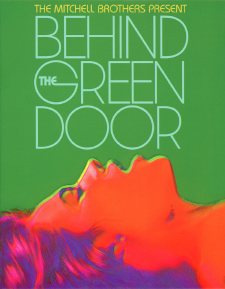
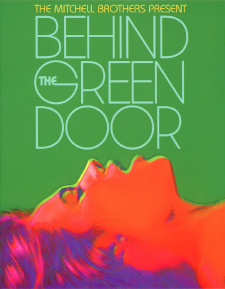
Behind the Green Door is based loosely on an anonymous short story that had been in circulation for years at that point, sometimes (but not always) titled The Abduction of Gloria. Ironically enough, while porno chic was defined by films that tried to tell actual stories, not just use them as an excuse to string together otherwise unrelated sex scenes, there really isn’t much of a story to Behind the Green Door. At the time, its biggest claim to fame came from a fateful casting choice that the Mitchell Brothers made: Marilyn Chambers. Chambers’ modeling career had included a photo that ended up being used as the new cover art for Ivory Snow detergent, and once the advertising campaign was in full swing, the Mitchells were able to capitalize on it when publicizing their own film. The 99 and 44/100% pure Ivory Snow girl being ravished in explicit fashion was too good of an opportunity for the Mitchells to pass up, and they exploited it to the limit.
Behind the Green Door does offer a framing device where Barry Clark (George McDonald) recounts his experiences at a private club with a famously green door, but the majority of the film revolves around Gloria Saunders (Chambers), who has been abducted and is forced to perform there. Her sexual awakening involves being under the ministrations of a group of women, an African gentleman (Johnny Keyes), and more. Eventually, everything comes full circle to Barry, who dreams of his own experiences with Gloria. That’s about it. Oh, there are some other interesting characters like the club’s mime (Toni Attell) and bouncer (notorious Oakland Raiders defensive end Ben Davidson, who thankfully keeps his clothes on). But most of Behind the Green Door is just Gloria’s extended performance on stage. Yet it’s still so much more than that.
Like some later films that it inspired (Café Flesh, for instance), Behind the Green Door is erotica that’s not particularly erotic. For the first 15 minutes, there’s no nudity or sex at all, and even then, the first example is just a brief topless scene. It’s more like 20 minutes before there’s any actual sex, and much of that is filmed a bit differently. There’s less of an emphasis on closeups, at least at first, and no “money shots” at all until the end of Gloria’s performance—and even then, the Mitchell Brothers dispense with it in highly stylized fashion in an extended sequence that features slow motion, color filters, solarization effects, double exposures, and more. It’s like the famous diving montage in Leni Riefenstahl’s Olympia, where she lost interest in the results of the individual dives and instead focused on abstract imagery of the divers blending into each other, the water, and the sky. The Mitchells also show the club’s audience getting sufficiently aroused to join in the action, but they filled the audience with “average” people who aren’t particularly attractive (interestingly, they even threw in a gay couple, something that would have still turned off many male viewers back then).
In other words, Behind the Green Door is different, even by the adventurous standards of porno chic. It certainly struck a nerve in 1972, although how much of that is due to the Mitchell Brothers breaking the mold and how much was simply due to the presence of Chambers is a fair question. But despite continued legal issues in some communities, Behind the Green Door was a smash success, hauling in—well, estimates vary, but it was certainly in the tens of millions of dollars, for a film that cost barely $60,000 to produce. Unfortunately, thanks to fraud, bootlegging, and interference from organized crime, Jim and Artie Mitchell only saw a fraction of those returns. This was the Seventies, after all, when corruption was real corruption. But Behind the Green Door still left behind a legacy that can’t be denied (regardless of the tragic twists of fate that eventually led to Artie’s murder at the hands of his own brother). It’s an indelible portrait of a decade in which the boundaries of cinema were being explored by filmmakers of all stripes.
Cinematographer Jon Fontana shot Behind the Green Door on 16mm Ektachrome Commercial reversal stock (presumably 7252) using spherical lenses, framed open-matte at 1.33:1. Reversal stock eliminated a printing stage since it captured a positive image in camera, so there never was a camera negative. The Mitchell Brothers also printed using A/B rolls, so any dissolves or fades didn’t suffer from the image degradation from cutting optical dupes into the original camera footage. While the initial premiere version that played at their O’Farrell Theatre in San Francisco was still in 16mm, wide release prints were blown up to 35mm instead. For this version, the original 16mm reversal A/B rolls were scanned in 4K on an Arriscan XT, digitally cleaned up, and graded for High Dynamic Range in HDR10 only.
The fact that the Mitchells used A/B rolls means that all of the optical work had to be re-created digitally here, so the dissolves and fades look just as pristine as the surrounding footage. Yet the opening titles do contain traditional optical composites for the onscreen text (blended with A/B roll dissolves), so it’s significantly softer and less detailed. (It may seem like there’s some instability during title sequence, but that’s just vibrations in the camera rig that was mounted on the truck being driven by George McDonald.) Everything else is as sharp and detailed as 16mm reversal stock would allow. There are some scratches, speckling, and other blemishes visible at times, but the image is otherwise solid and displays some nicely refined textures. The flesh tones do veer a bit to the ruddy side at times, but the overall color balance is quite good, easily trumping any and all previous home video version of Behind the Green Door.
Audio is offered in English and French 2.0 mono DTS-HD Master Audio, with optional English SDH, German, and French subtitles. While the original 16mm mag mix was available, it must not have been in good enough condition, because it looks like the optical tracks from an answer print were used for this restoration instead. There’s minimal noise, distortion, or other artifacts, and the energetic rock/funk soundtrack has some heft to it (note that while it does sound like it’s distorted at one point near the end of the film, that’s an intentional effect to accompany the distorted visuals.) The French version came from a different source, with more noise, and it also uses different music at several points (which is probably why it was included here).
The Distribpix/Mélusine/Vinegar Syndrome Limited Edition 4K Ultra HD release of Behind the Green Door is a 3-Disc set that includes a Blu-ray with a 1080p copy of the film and a CD copy of Daniel Le Blanc’s soundtrack album. It also includes a reversible insert; a 40-page booklet featuring new and archival essays by Jared Stearns, Laura Helen Marks, and Shawn Langrick; a 24-page booklet with the original anonymous short story; and an 11x17 replica of the Japanese one-sheet poster. Everything comes housed in a spot gloss hard slipcase/slipcover combo that was designed by Robert Sammelin. Limited to 4,000 units, it’s only available directly from Mélusine and a few select retailers. The following extras are included, all of them in HD (with the exception of the upscaled Japanese promo trailer):
DISC ONE: UHD
- Commentary with Jared Stearns
- Audio Interview with George McDonald Part 1
- Audio Interview with George McDonald Part 2
DISC TWO: BD
- Commentary with Jared Stearns
- Audio Interview with George McDonald Part 1
- Audio Interview with George McDonald Part 2
- Initial Release Trailer (3:08)
- Wide Release Trailer (4:54)
- Japanese Promo Trailer (2:19)
- Behind the Mitchell Brothers Group: Preserving the Legacy (41:31)
- Marilyn Chambers: From Soap to Superstar (8:58)
- Winding Through: Behind the Green Door (8:38)
- 8mm Digest Version of Behind the Green Door (29:48)
- Archival Image Gallery (4:03)
DISC THREE: CD
- Sisters (3:49)
- Classical Guitar/Anon (4:31)
- Lova’s Theme (1:34)
- Buck’s Theme (3:01)
- Miner Violin (4:04)
- Sweet Cheeks (5:00)
- Bare Ass Naked/Asstray (4:05)
- Johnny Keys’ Theme (1:58)
- Cum to Me Neil Murphy (2:36)
- Diddling (3:33)
- Trapeze/Quinn’s Riff (4:05)
- Apre (3:14)
- Climax (3:36)
- Ben Davidson’s Theme (2:34)
- Trucking (2:48)
- Funk Me (2:36)
- Kidnapped (2:12)
- Tender Under Foot (1:32)
The commentary features Jared Stearns, author of the biography Pure: The Sexual Revolutions of Marilyn Chambers. He draws on that experience to dive into Chambers’ work on Behind the Green Door, but he also provides deep biographical information about the Mitchell Brothers, including how they entered into the film business in the first place. He tells plenty of stories about the making of the Behind the Green Door, and identifies other cast members wherever possible. He runs out of steam toward the end and he does occasionally describe what’s happening on screen (including things that don’t really need description), but there’s still plenty of interesting information here.
The audio-only interview with George McDonald is also encoded as an alternate audio track for the feature, but it’s not a scene-specific commentary. Since it’s longer than the film, it’s broken up into two parts running approximately 97 minutes. It’s hosted by Ashley West of The Rialto Report, who guides McDonald along a journey through the actor’s life and career. The interview was originally recorded for Podcast 54 in September 2015, just four years before McDonald passed away.
The various Trailers are all interesting and worth checking out. The first one was created for the initial 16mm only release of Behind the Green Door at the Mitchell’s O’Farrell Theatre in San Francisco, and it was never used again. The sound elements are lost, so it’s set here to selections from the soundtrack instead. There’s also the trailer for the wide release 35mm version and a Japanese trailer that includes different footage of Chambers. (While the first two are framed at 1.33:1, the Japanese trailer is letterboxed within the 1.33:1 frame.)
Behind the Mitchell Brothers Group: Preserving the Legacy is a documentary about the Mitchell Brothers and the process of acquiring and preserving their film archive. Led by Steven Morowitz, owner of Distribpix and lead producer for Mélusine, Preserving the Legacy brings together Jared Stearns, Vinegar Syndrome co-founder Joe Rubin, archivist Oscar Becher, and lead scanning technician/restoration artist Brandon Upson. Together, they paint a vivid picture of the improbable rise and tragic fall of the Mitchell Brothers, accompanied by behind-the-scenes footage that was contained within the Mitchell catalogue. It’s a fascinating portrait of a different era, with a natural emphasis on the making and release of Behind the Green Door. Preserving the Legacy also includes valuable information about the physical cleanup of the 16mm film elements, scanning, and digital restoration.
Marilyn Chambers: From Soap to Superstar features Jared Stearns providing a brief but concise overview of the early stage of her life, from childhood to her casting in Behind the Green Door, including the importance of her picture on Ivory Snow boxes. It also includes some interview footage with Chambers, presumably taken from the Mitchell archive.
Winding Through: Behind the Green Door is a deeper look at the optical composites and A/B roll printing in Behind the Green Door, hosted by Joe Rubin. He breaks down the way that optically composited titles were integrated into the A/B roll dissolves in the title sequence, as well as the complex nature of the composites during the “money shot” montage. He also shows how A/B/C roll printing was used for the final scene between Chambers and McDonald.
Finally, in addition to an Image Gallery and the soundtrack CD, there’s also a copy of the 8mm digest version of Behind the Green Door, running less than half the length of the feature film. Since there’s no sound, it’s also set to selections from the soundtrack (in 2.0 mono Dolby Digital). The damage hasn’t really been cleaned up, so it looks pretty rough, but it’s still an interesting glimpse into the world of home video before videotape was a thing.
It’s an impressive slate of extras for an adult film, and an even more impressive set when you add in the CD, booklets, and the packaging. Add in revelatory video remastering, and the Distribpix/Mélusine 4K Ultra HD release of Behind the Green Door is arguably one of the best releases of 2026 to date. It doesn’t just restore the film; it also restores the history that surrounded it. While it’s perfectly understandable if films like this just aren’t your thing, it’s still highly recommended for anyone who wants to explore this bygone era.
-Stephen Bjork
(You can follow Stephen on social media at these links: Twitter, Facebook, BlueSky, and Letterboxd).